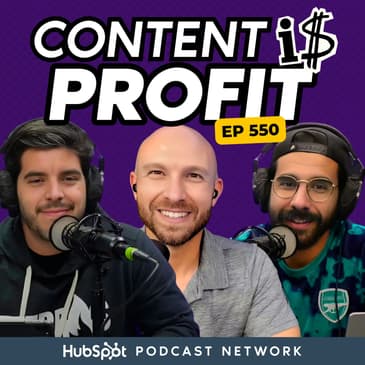
Today we sat down with Nate Green, who went from law enforcement to
business entrepreneur and sold his company for a jaw-dropping 8 figures!
Want to know how he did it?
Hint: It's not just about the money!
Dive into today’s #GoldenBoulders:
The game-changing moment that sparked Nate's transformation
Should you be aiming for a massive goal? Might not be for everyone…
The one moment that made him rethink his purpose.
How to turn life's biggest challenges into your ultimate fuel
The powerful framework that might just redefine your path to success
Plus, Nate reveals a unique content strategy that's never been done
before.
Could this be your next big move?
Tune in and enjoy!
Connect with Nate:
https://successwithnategreen.com/
https://www.linkedin.com/in/nate-green-532ab0b2/
https://www.instagram.com/iamnategreen/
https://www.facebook.com/iamnategreen
Connect with Fonzi:
Connect with LUISDA:
Subscribe to the podcast on Youtube, Apple, Spotify, Google, Stitcher, or anywhere you listen to your podcasts.
You can find this episode plus all previous episodes here.
If this episode was helpful, please don’t forget to leave us a review by clicking here, and share it with a friend.
[00:00:00] My goal is to impact millions of people. Well, the only way to do that in my lifetime is to make stupid big steps. And so it's like, okay, great, let's get uncomfortable. Have you always been a self-motivated person? Have you dealt with people that maybe struggle to, you know, have that long-term vision? And once you connect to somebody's purpose, then hope naturally comes. Why? Because in your darkest of times, you still can look up and see this hope of the purpose of why you're here. And man, everything else connects.
[00:00:29] What are some things that people can start identifying and be like, these are my first margins, my first containers, and then I'm going to go execute in the next couple of weeks, very intentionally? So it's the 80-20 impact rule. What is that top 20% that impacts my momentum the fastest? But then the problem is, is right under that, you have the next 20%. I call that the danger zone. What inspired you to create at this level, right? Because you have your book and you have a platform that you're developing.
[00:00:57] So how deep do you guys want to go here? Because I love this conversation. And so let's go a little deep here. I'm going to get a little bit more open, okay? Let's go. So welcome back to another episode of Content is Profit. Today we had Nate Green here on the show, author of Suck Less, Do Better.
[00:01:24] And he also recently exited his company for eight figures, baby. But he actually left us with a few golden boulders. One of my favorite personally, how to prioritize focus over feelings. Oh, baby. He also talks about the three pieces to how to stay motivated. And I really liked his take on morning routine and how he's been tackling that aspect of his life.
[00:01:50] Yeah. Are you a fan of morning routine? Yes? No? Let us know. I know that's been of debate in social media recently. I know. And towards the end of the episode, we're actually asking him specifically about his content strategy on this new phase of the new company that he's building. So super exciting stuff. Nate, thank you so much for coming and enjoy. See ya. Nate, welcome to Content is Profit, man. I'm stoked. We connected last week and you're a powerhouse, man. And, you know, we connected with a previous friend or still friend, I guess.
[00:02:21] Heath, he's been on the show. He's been a customer we've known since the fitness industry. And he's like, you need to know this guy. And, you know, we got to talk and you are not only a creator, but also you just exited your company for multiple, multiple dollars. Many, many, many dollars. And you're... Like $10? Just, you know, pocket change. $10. And you're doing some cool stuff, man. So I'm excited to have you here on the show and welcome to Content is Profit. Let's go. Man, I appreciate it, guys.
[00:02:49] I get to be with two of the best, so it's incredible. Just one. Just one of the best. We'll let the crowd decide which one it is. Yes. Pick a bro. 1.5. I like it. Yeah. So, I mean, let's start here, right? Like what's different from, you know, you just exited your company for eight figures and more. And now you're on this, like, path of helping people, right? A lot of people and a lot of creators that listen to the show, they're in that path of, hey, let's provide these solutions. Let's go create something that matters.
[00:03:18] And spoiler alert, we have a little bit of a book here. Very excited. Stock Less Do Better for those listening. And what inspired you to create at this level, right? Because you have your book and you have a platform that you're developing. Yeah. Right now we're running a mastermind. We got some programs. We got that book. And another spoiler alert. Actually, I'm meeting with my publisher today to sign the contract for the next book. Let's go. So, yeah.
[00:03:46] So, she wants a total of four more. And so, I'm excited about that. It just kind of took me a little bit to figure out, like, which one to go next. And so, now I've locked that in. And so, I'm super stoked because we're going to push hard into it. So, my entire goal has been, if God's going to bless me with this exit, then now I feel this massive obligation to have an impact. I feel like it's my job to take every ounce of who I am and have a massive impact in this next leg of my journey. Yeah. So cool, man.
[00:04:17] What inspired you? Right? Like, we had this conversation. Fonzie has no idea. Right? And a lot of people get into this online world when they start creating and they think, hey, I'm going to start selling something small. And I'm going to start creating this content here. You went straight from, like, long form, which is your book and your masterclasses and your community. You, like, dove right in. And you're doing some pretty cool stuff. Right? Like, what was that jump? Like, what went through your head to, like, okay, I think I can do this.
[00:04:47] Right? And I think I can do it to a point where people are having massive wins. Yeah. So, with any business I've ever created and succeeded doing it, it's always been start with the end in mind. What is the goal? What is the long-term vision? And then, for me, it's starting to build backwards from that. Because the problem is, a lot of times, people, so often, they start a business and they think so small. And they think, like, oh, I'm just going to offer this service or I'm just going to do this.
[00:05:15] And actually, you know, they're kind of, like, taking a bunch of micro steps. But why not take leaps? And then, as you're taking leaps and making massive steps, then you can backtrack and say, okay, if this is where I'm going, then what do I need to do? My goal is to impact millions of people. Well, the only way to do that in my lifetime is to make stupid big steps. And so, it's like, okay, great. Let's get uncomfortable. Let's get vulnerable. Let's be real. Let's be, you know, talk about struggles and difficulties. Let's talk about it all.
[00:05:43] So, you know, why not start with a book? Start with a book? Great. Lost leader, whatever you want to call it. It's a great marketing tool. So, when you're talking about that piece, it also helps get your name out there in a lot of different ways. Get your books literally in hands of people and see what kind of impact it can have. And then people naturally are going to need more resources, more resources. And then you work on those things. You can start backfilling all the different resources and have just an entire way to move people through all these different areas that they need help in. Yeah.
[00:06:12] I have a lot of questions. But, you know, honestly, like I have a lot of questions still about your background. I think it's super interesting, the fact that you're a police officer before doing this. Right. So, we can dive into that a little bit later. But, you know, when you talk about big goals, right? I think Jim Collins in Good to Great, he calls it the big, hairy, audacious goal, something like that. Right. There's like an acronym for it.
[00:06:40] I, in a way, believe that. Right. I believe start with the end in mind, 100 percent and then kind of like backtrack. But at the same time, I've personally have felt, you know, that maybe I've been chasing for like a huge goal for too long sometimes. And I've, you know, kind of like experience the opposite effect. Right. Rather than being motivating, maybe I feel like I'm just chasing. Right. I'm just chasing something that I don't know. You know, like there's a lot of doubt at moments.
[00:07:10] And it's like, am I really going to be able to, you know, catch to that goal? And it has the opposite effect rather than being motivating. Sometimes maybe it's even a little bit, you know, kind of like pushes you down a little bit. Yeah. Demotivating. Right. So I'm curious, you know, do you do you ever feel that? Have you ever felt that? Have you always been a self-motivated person? Have you deal with people that, you know, maybe struggle to, you know, have that long term vision and, you know, keep it alive for long?
[00:07:39] Or maybe they do better with, you know, short goals one step at a time. I'm curious. Right. Have you have you dealt with that stuff? So so I love it. And I love the question because that analytical side, because we deal with all those different pieces. And that's really where when you're dealing with humans, we always have these strengths. We have these capabilities, but we also have these doubts, these fears, these insecurities. And I call those cracked lenses. You know, we talk about that in the book.
[00:08:07] And that's really where we have these things, whether it's difficulties that we face or whether that's childhood issues or all these relationship issues or past or mistakes. We get these things that derail our progress or our mental processing. So to go specifically down to your question, you really have to have three pieces together that all work together to keep you motivated and moving. You have to have the core of who you are. 100 percent dialed in. You have to know what you're built for.
[00:08:36] And then understand how you can become the best version of you. Then you have to have what I call your fuel. This is all the driving forces like, why are you moving? Why are you not being complacent? Why are you driven? Why are you hungry? Why do you want a better life? You have to have that locked in and channeled. And then the third piece is the lighthouse. That is what we're talking about here. That long tour, long term stupid goal. That's that third piece.
[00:09:04] If you have any of three of those missing, you'll never succeed. Why? Because there's days that the goals are too far out. So stupid that you're like, why am I chasing this? But if you have your why locked in, you have your fuel locked in, then you're sitting there. When you feel like you're drowning, you can look up at the goal and realize that is what I'm chasing after. This is why I'm chasing it. And this is what I'm built for. Those three pieces locked in.
[00:09:32] I call that your outcome equation. When you have those three pieces, then the multiplier is focused action. That's day to day going after your future one step at a time, setting smaller term goals down that pathway. Can you give me an example of your life? Right. Like how did those look like when maybe you started your own company? Right. And also, I'm curious, have you ever, you know, have you always been disciplined?
[00:10:00] Because obviously when I imagine a police officer, I imagine somebody that is very disciplined. You know, they get up early. You know, maybe they go work out. You know, they have to follow, you know, the law and all that stuff. Everybody has to follow the law. Just saying I'm not breaking it. We all have to follow the law. Full disclaimer, we are not telling you not to. Yeah, yeah, exactly. But, you know, I'm curious, right?
[00:10:27] How did that kind of like framework that you just shared looked for you when you were building your company? Yeah. So I have been extremely structured. I've always been rather disciplined. But I'll tell you, the one thing is being disciplined and structured does not mean success. Because there's a lot of things that you could be structured and go in the entire wrong direction. So I want to make sure we touch on that.
[00:10:50] But my life as a cop, there's a lot of fears, insecurities past of going that route was very safe. And I know that you guys are thinking, wait a second, you're getting shot at. That's not safe. But it was safe in a career choice because it had pensions. It had retirements. It had financial security. So it was a process that the final output was more defined. You work for 25 years. You get this at the end of the rainbow. Very clear.
[00:11:18] And so when I started being a cop, I realized that I was a little unsettled. By about two and a half years deep, it was like, okay, very structured, very disciplined. There was a path I could see. But I was like, there's got to be more. There's got to be more. I'm built for more than this. I'm built to be better than this. There's something else. And so I started doing personality testing, career testing, cognitive testing, to figure out what I call focus my greatest asset. Who am I?
[00:11:48] What am I built for? That first piece. Remember the core? Like, what is it that I could become? And then it was like, okay, great. Yeah, I'm good at being a cop. I love smashing the crap out of people and taking them to jail. Amazing. Obviously, my use of force was always appropriate. But that side of the coin was like, man, once I started realizing who I was, I created what I now call the display.
[00:12:14] You know, like a trophy case, all the lights that shine on that trophy. Yeah. The display of who I was able to become. And so I started realizing that, man, I was capable of taking on so much more than what my childhood told me I was capable of taking on. Yeah. I was so much more able to achieve things that the people around me told me I couldn't.
[00:12:39] And so once you start unlocking this capabilities, you start looking at it from a different perspective. And that was a massive growth time in my life where my disciplines started to change. It started to be a little uncomfortable. It started to be a little bit of fear, fear demolishing. It's like, wait a second. We're going to go do something different. Yeah.
[00:13:07] That's interesting that this is very transparent here. Very. I don't know. It's odd. I've never shared this on the podcast. But as you were sharing that, the thought that popped into my head, right? You said in the past, you know, maybe some people that were telling you, you cannot do this X, Y and Z. I feel like the total opposite in a way.
[00:13:30] You know, I feel like I was dreaming so big when I was a kid, you know, and I had a lot of people be like, you can do, you know, whatever you want. I honestly had a lot of people be like, you're so good at this. You're so good at that. Right. And I feel like as I'm getting older, my confidence on, you know, maybe achieving that, like maybe watching that trophy, that display that you're talking about has like diminished a little bit in a sense. Right.
[00:14:01] So, you know, I'm curious. What is your point of view? I'm just curious about your thoughts. Right. When you when you see a person like that, when you meet a person like that. So there's two pieces. There is what I call the noise. That's what's happening to you. There's all this noise as a childhood. Oh, my gosh. You should go play soccer. You should be incredible at this. You should go be a chef. You should be this. Oh, my gosh. You're incredible at. And wait, wait.
[00:14:27] People are taking maybe just because we like something and running it 10 steps down the pathway and be like, oh, my gosh, you should do this. No. That's all noise. That's all like all this stuff that jumbles up and cracks our lenses. It's like, man, wait a second. These expectations are crushing. So whether you have people that have limiting expectations and beliefs for you or about you or whether it's, oh, my gosh, you're great at everything. You are going to be incredible expectations.
[00:14:56] It's noise. It's distractions. It's derailment. That is based upon what they think about you, not based upon what you think about you or what you feel about you or what you most importantly know about you. So whether it is comparisons, competitions, all this stuff, distractions, these are noises or cracked lenses. It's all in the same bucket. It just affects or comes at us from two different perspectives. And that's a problem. It doesn't matter which side it comes from. It's all destructive. Yeah, that's interesting.
[00:15:25] It's a nice therapy session. I appreciate it. I'm here for you. We can go off camera here in a little bit and, you know, spend a few hours together. Yeah, no, no worries. I appreciate it. I mean, I'll take you up on that offer, you know, but at the same time, I think there's value on, you know, sharing some of this stuff because I know, you know, especially in the content world, it can be very easy for, you know, let noise in, you know, and derail people from their objectives.
[00:15:54] I am, I'm guilty of, you know, comparing myself whether I want to or not, you know, kind of like I just look at stuff and like that first thought that pops up, you know, might be a little bit of, of comparison, you know, between other creators that I see other people that might be in somewhat aware in similar situations. So I know, I know somebody that might be in a way of thinking, you know, I think I'm having these challenges. So I think these are some good frameworks where they can, okay, well, let me, let me sort out the noise, right?
[00:16:24] Let me create my, my display, right? Let me, let me find my lighthouse. I think those are some good steps, but I don't want to deviate too much from the content conversation as well. I mean, I think this applies, right? Because a lot of people that come to the show or the studio, they're also entrepreneurs, right? And they're facing all this at different levels, right? At the end of the day.
[00:16:46] And when people are trying to create content to put their message out there and whether that's like to advertise or promote whatever they're doing to help others, all these things creep into our minds, right? Like, you know, us also being guilty of it. So, and sometimes our mind will put this, the friction points or walls that, you know, for some are very real. I remember a couple of people that come in here ready to rock and roll with their podcast. And as soon as the camera turns, you know, red, that's it. They're froze completely.
[00:17:14] And there's like this syndrome, you know, creeping and, and they were not able to perform in front of a camera, for example, right? Or whenever we're ready to, you know, make an offer, for example, it could creep in, you know, and, and we're like, oh, you know, we don't. Maybe we don't deserve this and this thing. So like what, like, I'm interested to know like that first, like two, three steps of like, okay, this might be happening or we might encounter in this friction, but we don't really recognize it. Maybe because we're so in it, right?
[00:17:44] Maybe somebody from the outside can, and they pinpoint me like, okay, this is exactly what we need to work on, for example. But when we're in this lonely world, sometimes as creators, right? Because maybe our environment doesn't recognize, you know, what we're doing on, or the loved ones are like, you're crazy. Like, what, what are you doing talking to the camera? Like you're being, you know, at this job 24 seven, and now you trying to do this and people don't really understand until like you make it happen, right? It could be a lonely road.
[00:18:10] What are the first like two steps or maybe like contingencies that we can put in place as a creator and as an entrepreneur to continue to move forward regardless of that noise that comes, you know, on the outside? See, the first thing that in my opinion, you really got to have locked in is a greater purpose. Because if your, if your purpose is just to turn on a camera and get some likes, okay, why?
[00:18:34] Like the, the pain of, of doing the activity of putting yourself out there is greater than the pain or being inside this comfort. So the greater pain wins. And so the greater pain, you're going to give way to that. And so when you think about the purpose, when you identify the purpose behind it all, and you really lock in that greater purpose, then it's like, wait a second. Here is what I'm chasing after. Here's the impact I'm trying to have or whatever you're trying to do.
[00:19:02] And for a lot of people, it might be, Hey, my, my purpose is I need to pay the bills this next month. I need to make sure that my kids are taken care of. Sometimes that is the greater purpose that drives you. And so you got to make sure that you're always framing on the purpose rather than maybe the pain, the pain of that moment, the pain of the discomfort. That's challenging.
[00:19:21] But once you lock in, which pain is greater, the, the, the pain of getting a little bit uncomfortable or the pain of failing on your purpose, the greater pain will always be the one that you give way to. And so what you need to do is lock in and really connect to the greater pain. If you take the easy roads versus taking the proper action. What, what was your greater pain when, uh, you know, you decided to take on this life?
[00:19:49] So, so back when I was 23, I had heart failure. I had to retire from being a cop and I was told on a Wednesday that I was done and I had no monies in savings because I had gone through all kinds of medical stuff between being paralyzed from the waist down for months. And then the heart problem, you know, heart failure right after I'd spent, you know, all my vacation days were burned out. All my money and reserves were burned out. And so I had to figure out how to survive.
[00:20:17] And so I went through a season. Uh, luckily I'd gone through that exercise we were talking about earlier about trying to figure out who I was. And so I had a great plan. I'd already started going to school for business. I'd already started working down that, that pathway, but my plan was 20 years down the road, not today. And so once I started my business and I realized how tough it was at that point in that transition, I'd gotten married.
[00:20:43] And so then I had adopted my, my then's wife's daughter and I realized that it was trial by fire. There was no option. And then unfortunately with my heart problem, they told me I had 10 years to live. Oh man. So when you're told you've got 10 years to live, there's something that clicks inside your brain. And even though six months later, they told me it was a mistake and it was a wrong misdiagnosis.
[00:21:11] You can't unknow that you can't unwind that. Uh, and by the way, guys, don't worry. I didn't die in case you guys were wondering, I am still here. We're good. But there's something that clicked in my brain about providing for my family, making sure that everybody was okay. If something happened to me and locking in like crazy. Um, and, and even though there is that mission that I had for a season of my life, it was great.
[00:21:40] But then unfortunately I had some people I knew that, uh, that killed themselves, uh, throughout some of those years. And so now on the other side of this transition where I have what other people would call ultimate financial freedom, um, man, I'm locked in more than ever. Like my purpose is to help people find hope by connecting to their purpose.
[00:22:03] And I will do, I'll spend every last day of my life really diving deep and helping people understand that they're here for a purpose. They just need to find it, lock into it, and then take action to achieve the greatest version of it that they possibly can. And once you connect to somebody's purpose, then hope naturally comes. Why? Because in your darkest of times, you still can look up and see this hope of the purpose of why you're here. And man, everything else connects in those moments. Yeah.
[00:22:32] I love the, kind of like seeing the progression or hearing the progression of the goal, right? At first, obviously when faced with mortality and you hear people talking about that a lot, right? How, when, uh, faced with the thought of mortality and, you know, just getting lost in your thoughts, there's a lot probably that people, you know, gain. But at the same time, it kind of like, it looks like you had one big goal, which at that time it was probably huge. Right.
[00:23:03] And then after you accomplish that, the new progression is the mission that you just pretty much share with everybody. So I think that's super, super interesting. I don't know if you, if you got anything to add in here. I'm just curious on, on the, on the path, right? My mind is like, what, what was the business, right? What is the business that you created out of that, that incredible vision? So I chased down the financial markets.
[00:23:25] And so I built a accounting and tax practice, a wealth management firm, a lending firm, like a mortgage firm, and then also a consulting firm where I did business consulting. So the main one that I started back in 2008, the one that almost made me go bankrupt in the first year. I mean, what, what a tough first year, insane, man, actually I lost my house during that season. And it was, it was tough grinding through that and making the choice to stick with it.
[00:23:55] When everybody around me and everything said, you should go get a job, man, I stuck with it. And in the end, there was the accounting and tax practice, which I built up. I built to be a machine built up to be almost 50 employees and then sold it to a private equity. Nice. That's amazing. So good, man. You want to go on financial industry? I don't think that's my forte, for sure. I'm here thinking, right?
[00:24:21] Like your story is pretty insane and incredible. You know, we've seen that chapter kind of develop, right? And you're obviously now sitting in a position where you can help a ton of people through those stories, right? But I also see people that they're like, man, like I didn't have a heart failure. Like my doctor didn't tell me I had 10 years to live, right? Like, do I need, like, do I actually need that moment of realization to actually, you know, take action?
[00:24:51] Right? Like, or, you know, my personal moment of realization happened almost 15 years ago, right? Where I made the decision to come here to the States. And sometimes I see, I feel like that could be fading almost, right? Like some, so, so many things kind of stacking up on top of that, you know, and life happening, you know, these things happening. And it's almost like, oh, you know, that made me move mountains to be in the position I'm in now. What now? Right? It's like, oh, man.
[00:25:21] And we go back to, okay, how do we explore that purpose, right? And, you know, yesterday, for example, for me, it was a very hard day. Like personally, right? It was like, it was tough to like sit down in front of the computer and do the thing that I needed to do, right? And it happens from time to time. So it's like, okay, what's a technique? What's the thing that we can do to go back to that spot and be like, okay, I need to move forward, right? Is it family? Is it your kids?
[00:25:49] Is it like a movement in your body? Is it go drop down and do 10 push? Like, what do you do to get to that point to do the thing that we don't want to do towards, you know, our main goals? So there's a few different things and it's never the same for everyone. In my life, like a part of the mastermind that I have is we actually teach people how to lock in and identify their fuel. So people's fuel come from different places. And so that's one of those three things we talked about earlier. The fuel can come from challenges.
[00:26:18] It can come from adversities. It can come from actually inspirations such as, hey, listen, I saw my dad go through X, Y, and Z, and I saw him struggle to provide this opportunity for me. And that's where, see what I'm saying? Like that could be a fuel source. But a lot of times the best fuel sources come from deeper. They come from what I call your basement. They come from trauma. They come from hardships. They come from these pivotal moments in your life. They come from something deeper.
[00:26:47] And so a lot of times people come to me, they're like, hey, Nate, listen, I can't lock in, man. I can't stay motivated. I said, you're not going deep enough. And then we work them deeper and deeper and deeper. And we uncover stuff from their past that a lot of times they put in their basement, they've locked the doors, and they've never wanted to see again. And so for me, that's where we go. We go deep and we go find it. We go realize it. And then we help people lock in because of it.
[00:27:11] And so a lot of times what has happened is in that process when people understand really who they are, and then they lock into that fuel source. Next thing you know, it requires life changes. Because sometimes if the mission that you're on, the journey that you're on isn't fulfilling what you're really built for, and it's not really locking you into that fuel source, it's time to change directions. And so sometimes there's different aspects. You can't manufacture a hunger. You can't manufacture it. It doesn't matter.
[00:27:39] You can be like, oh, yeah, I want to go make a trillion dollars. I don't care. I could say that all day long, and it just has no emotional connection. There's a coach I know, and he uses this term, we're coming for everything. And I'm like, I'm not coming for everything. I don't want everything. You can go come for everything. I don't want to. But it's because I can't connect to it. Yeah. And so we all need to connect deeper to whatever that thing is.
[00:28:07] And so then that way, when you're having those hard times, those hard days, you got to be able to lock in. And also, what I do is, this is a notebook that I have, and I read this every single day. And if you can't tell my bad handwriting, it's, today I will show up. And in here, this locks down all kinds of stuff of how I'm going to lock in. The first words right here are my words. You guys can't even see it. The words of the year, which is silence, significance, and the stretch.
[00:28:37] So I'm going to silence the noise. Remember, we're talking about the noise, the distractions. I'm going to silence the noise. I want every single thing I do to have significance. And the stretch means I'm required to be uncomfortable. I need to go where maybe I don't want to go. But this is something that I literally tell myself every day. Today, I am present, focused, persistent, relentless, resilient, and hungry. And then over here, it talks about how I will show up. And this is all the things of how I'm going to show up today.
[00:29:04] This is my Bible for how I'm going to show up. Not the legitimate Bible, which is over there, which I read every day. But this is my Bible for how I will show up today. And if I don't, then I need to suck less and do better today. Boom. Boom. Yeah, I like that. You know, it's kind of sounds like a compass, like a personal compass on where do you want to go? I do have something similar in, you know, in my computer and alarms and pop. And, you know, they have reminders and stuff like that.
[00:29:33] But, you know, I will say I am guilty of sometimes just being like, I know another time, you know, and I like, I just I'll just keep it, you know. And at the end of the day, it just comes down to it being a choice, right? It's a choice of, well, maybe you feel dumb, but, you know, you got to make a choice of whether you want to check your compass and see is what you're doing actually aligned with what you what you want to go.
[00:30:01] How do you deal with maybe the days that you don't feel like, you know, checking your compass or being like, oh, you know, or are you always 100 percent? And I doubt you're always 100 percent. You know, nobody is. It's physically impossible. You always are going to have the days. And that's really where you really have to do the work down into those three pillars, really the core, the fuel and the lighthouse, because you have to do so that I call it focus over feelings.
[00:30:30] You have to create your focus and whatever your focus is. Now you have actions assigned to that focus. And there's days that your feelings are futile. They're going to fail you over and over again. And even on those days, you have to know you're having a bad feelings day. You're like, I feel like I don't want to do it. That's the only feelings I got. And so you're walking through this and struggling through those emotions. And so the one thing I do is today's not a day I make decisions. That's the first thing I do.
[00:30:58] I limit a decision making because it's like, oh, why am I doing this? I blah, blah, blah. Nobody's going to care. Why am I going on another podcast? Why am I doing this? Like, what impact am I really having? The crack lenses, the noise gets the best of you, man. I've just failed and blah, blah, blah, blah, blah. You know, those days are going to happen. And so you need to know it's one of those days. You're limiting decision making. You just, I focus on what is required of you that day. And then the other thing I do is self-development.
[00:31:27] Is I pour into myself on those days. It's time to read more books. It's time to learn more, listen more. It's time to be fed. It's not a day I need to pour out. Because there's days that you could pour out over and over and over again. But then there's days that you need to be fed. And those days that you've got those feelings, that's a feeding day. That's the day it's time to eat something. Yeah. Yeah. I like it. I mean, yeah, I relate to that. I'm sorry. I feel like I'm hugging the mic here today.
[00:31:55] But I definitely relate to that. I have some of, you know, those low days. And I can see the difference whenever I don't pour into myself. Or maybe I just focus too much on, you know, I got things to do. And then I like the idea of just focus on like, just do the necessary, you know, to kind of like get those responsibilities done. And then pour into yourself some wisdom, you know, a little pick me up or whatnot.
[00:32:22] But I felt stuck some days where I'm just like, oh, I got to do this and that. And, you know, you pretty much burden yourself with a whole bunch of decisions. And at the end of the day, you feel even worse. Because, you know, you didn't have the energy to do what was necessary or the main responsibility, you know. And then you put all this extra load on yourself. At the end of the day, you're just like shaming yourself like, oh, man, I didn't do anything. I had a bad day. I had a bad day.
[00:32:49] That's the recipe to start another bad day on the next one, right? Well, 100%. And that's really where my morning routine is locked in. And that's where I really feel like everybody should have a morning routine. And even if it's not the best routine, just have a routine. But you really got to dial in as like, how do you connect to your day? And so my morning routine is literally as soon as I get out of bed, as I'm brushing my teeth, my earpods go in or my beats go in. And I'm listening to audiobooks.
[00:33:18] I'm feeding myself from the start. Why? I am handling the dogs, doing everything else. And then from there, I go to the next phase of feeding myself, which might be reading a book. After that, then it's, hey, listen, I got some time of prayer. I read the Bible. Why? Because I feel like it's really important to have my heart and my spirit in line. Then from there, I can start giving out. I can start putting out. But not until I've been fed. And in there, yes, espresso and a nice protein bar every morning, like clockwork. But you know what I'm saying?
[00:33:48] Like, you got to feed. You got to give yourself that routine. It's okay to make sure and take care of yourself first. Because how can you support other people when you haven't supported yourself first? Very important to lock in a morning routine and be consistent with it. And then if somebody starts falling off, look back. How's your morning routine? Oh, I fell off the wagon. Okay, that's why. Yeah. I'm looking at this and I'm also thinking environment, right? Like, how do we build an environment where like these things happen, right?
[00:34:16] Like sometimes I also feel like at home, it could be chaos, right? Like with two small children, right? You get home, you know, it's a mess. The toys are everywhere. The soccer balls are everywhere. And we're building habits and all those things. But the same thing, like how do we pour also into family, into those things? Or is the environment that we've created? And I'm a believer that we have control over all of that, right?
[00:34:41] So sometimes maybe we beat ourselves up because we know that we have control over that. We let that go and then we're like, oh man, that's my fault, right? And then we go sometimes deeper into that. So it's like, okay, what are your thoughts on environment, right? Like what are your thoughts on resetting some of that environment on expectations with your loved ones, right? Like you're my wife, for example, or my kids. And, you know, there's a lot of pressure, I think, into that too.
[00:35:09] It's like, I want to be an inspiration for them type deal, right? But sometimes we're exhausted and, you know, we don't want to go for that walk, for example. So how deep do you guys want to go here? Because I love this conversation. And so let's go a little deep here. I'm going to get a little bit more open, okay? Let's go. So first thing is control your controllables. That's it. Control your controllables. You can't control people.
[00:35:38] You can only control you. So that's the first main focus. The second thing is I went through a very tough 10-year marriage, which in the middle of it had an affair. Not me. She did. And then ended up with a massive disaster at the end. Child abuse situation. Complete disaster. The 10 years was a difficult marriage. She wasn't the easiest person. My greatest growth years were those same years. I controlled my controllables.
[00:36:08] I developed me. I poured into me. I tried my best in that relationship to make the best of that relationship. And I always compartmentalized the time properly. Meaning, here's business time. Here's family time. I wasn't a guy that was out late. I was always home every night with maybe an occasional business meeting after hours for like some kind of get-together. But it was like 99.9% of the time I was home with my family, dedicating my time with my kids. The weekend were family times.
[00:36:36] I would get up at 4.30 still and compartmentalize that early morning on the weekends for my growth, my development, my business until somebody else woke up. As soon as somebody else woke up, business all shut down. Now it's family time. Now I'm a dad. So I compartmentalized my times properly to make sure that I had all these pieces. So when you're talking about that side, very easy to do.
[00:36:59] And my theory is if I couldn't get business and business growth done properly within my compartmentalized time, then I shouldn't be doing it. I'm not working hard enough. I'm not working efficiently enough. I'm not delegating enough. I'm not building a team enough. It's my issue. It's a me thing, not a we thing. It doesn't, the family shouldn't suffer because every single night I can't do my work fast enough and well enough. And I'm working till nine o'clock and I see my kids for four or five days. That's not fair.
[00:37:28] No, I need to learn how to be more dedicated during my times and get better at being me and chasing down my dreams properly within my compartmentalized time. You're going to find a lot of people that argue that there's plenty of authors that go the opposite. And I completely disagree with them. And that's it. If you want to basically find all the ultimate success in the world and you want to burn the bridge on your family, that is your problem, not mine. I don't believe in balance. I would never claim to be a true balanced person.
[00:37:57] I am properly imbalanced, but I have everything compartmentalized. I take time for my health. I take time for my family. I take time for my religion, my mental health, my business, my finances. It's all compartmentalized, but it is definitely not balanced. Yeah, it's funny. On the content conversation, we always talk about the publishing pyramid and those resources that entrepreneurs or companies have to assign for those teams. And it's very similar.
[00:38:26] It's like, what are the resources that we have here? Is it the time? Is it the money? Is it the team? And we're like very specific with that. And how do you in general, right? Like in your life, how do you start identifying those areas and you start being like, okay, these are my top like four that I need to handle first. Right. Because, you know, when you and me spoke before the podcast, we both realized that we think very similarly in many ways. Right. And I'm like, if that's the path I'm going, I'm on.
[00:38:56] Perfect. I can take it. But, you know, how do you start, you know, identifying those things? Right. I'm as you were describing this, you know, I think personally I've seen a situation where it's like very similar to that. It's like, hey, you know, from here to here, building my margins type deal. It's like I and that helps me, too. It puts a little bit of pressure on that deadline of like I got to finish it. I've got to complete the task that I'm that I'm doing. Well, how can people do that?
[00:39:24] Because we see a lot of cases also, not only ourselves, but with people that come to see them. I have businesses and and we see that that's affecting the content creation aspect to it. That for them is very important as well because it drives the business. Right. So we're like, OK, how can we support them a little bit more? How can we help them a little bit more on this where we have the content, you know, margins very defined. But because everything else around it is a little bit of a mess, then we cannot be effective with the content side. Right.
[00:39:52] Which is, you know, going back to to the business side. So what are what are some things that people can start identifying? Be like, these are my first like margins, my first containers. And then I'm going to go execute, you know, in the next couple of weeks, like very intentionally. Yeah. So this goes back to that understanding the core who you are, because then once you figure out the core who you are, then you have to define what I call is your edge.
[00:40:15] The edge is like that top 20 percent of your capable activities that moves the needle the furthest, the fastest in your in your life, in your career, in your process. Like what are those tasks, those capabilities, those skill sets that when you put time in that bucket, man, you're talking about it's like a race car with some now a NOS and it's like it's moving. It's chasing it down. And that's what I'm talking about, you know, and then you have the rest. That 80 percent.
[00:40:44] So it's the 80 20 impact rule. What is that top 20 percent that impacts my momentum the fastest? But then the problem is, is right under that you have the next 20 percent. I call that the danger zone. The danger zone are things that I'm capable of. The things that, yeah, I can do it, but it doesn't have as much momentum building as that top 20 percent, that edge.
[00:41:14] Yeah. Yeah, that that's like it's easy to give away. What you find out is, is you're really living more in that danger zone than you're living in your edge because the danger zone is really the suck. That is what just takes up so much time. But what you got to find is you find the person where your danger zone is their edge. And you start realizing, wait a second, let's maximize everybody's biggest and greatest potential, their edge.
[00:41:41] And then once you build teams based upon everybody living inside that arena, not not only are you going to find more growth and development and success, you're going to find people are happier. Yeah. Team is going to be happy because they're like they're feeling fulfilled because they're living in their sweet spot. Very important. Yeah. I was going to say, I have such a challenging time compartmentalizing things and I feel like I hyper focus on the first thing I do in the day.
[00:42:09] And if I have to jump from one thing to the other, then I'm just like, it takes me so long to refocus, you know, put my attention kind of like on the things that I, that I need to do is super interesting. I was just, just a random thought. Yeah. So on that, you need to have a reset process. And so like a two minute, and I do this with a lot of my clients as we create a reset process that works for them.
[00:42:39] My reset process is different. I basically take a break. I do about two minutes. Sometimes it might be some pushups. I do some kind of physical activities. Might just be a few squats, whatever the case may be. Just kind of move for a second. Then I do some box breathing, which is just two seconds in or four seconds in, four seconds out, et cetera, et cetera, four seconds on all sides. So you do a quick box breathing and then you kind of breathe and then you go back at it. Simple. And so then I can change gears a lot faster, which over the years used to take me longer to transition.
[00:43:07] Now I can literally be done with, as soon as we're off, boom, I'm right back into the next. You know, because I've learned how to trigger my brain with simple process. And a lot of times it's just getting another espresso, a process, just standing up, going over, going to the machine, breathing for a second, filling up the cup. I'm good to go. Now I sit back down. Let's lock in. Yeah. Yeah. It's a skill. It's a skill for sure. No, I like it. It's a trained skill. You got to train yourself. You got to train your brain to click over. Yeah. Yeah.
[00:43:35] I want to transition towards the end of the episode and talk a little about the content system that you're creating. Right. We talked a little bit about your ecosystem and like what you guys are building. Right. You start with a book, which is not normal with most people that started this. Right. You obviously have years of experience doing this thing and, and, and your material is like really, really solid. Right. So, but at the same time, I want to paint a picture for somebody listening and be like, oh, maybe that's a path that, uh, that I can take on creating our own programs. Right.
[00:44:04] Our own masterminds or creating the, the things that, that I want to do to, to help people. So can you walk us a little bit to like a little high level? You know, what are the things that you guys are creating and what are you expecting to do in the next year or so? Oh, this next year is going to be exciting. Uh, we're actually going to be launching our podcast, which is, which is awesome. And this is something we're going to dive deep into, uh, the edge. The edge is going to be one of our major, uh, processes that we're going to be pushing into the edge of kind of who you are.
[00:44:33] When you found the edge of, you know, your purpose. And so we're going to dive into that and really interview people based upon like that moment that they had that click, that click of like, oh my gosh, this is what I'm built for. Or, Hey, this is my purpose, or this is my fuel. You know, each of these edges that they can find in their life. And we're going to really be diving into that. So I'm excited about that. That's going to be massive, uh, for, for us. I really feel like people are going to be excited about it.
[00:44:59] Um, I do have a killer content strategy that at this point I can't disclose, but it's wrapped up in this next book. That is, uh, I just started writing and I've got an entire plan. It's never been done before with a book. I want to take a book and make it more of an experience. And it went with it. It's going to be kind of like a mesh up. Think of it as like more of like book meets podcast meets, meets, uh, like, uh, a small community.
[00:45:27] And so like bringing all three together in one experience and for the price of just a book. Yeah. And, and so, so that's a part of it. And a part of that, that process is going to kill is bring so much cool content out of it. And I'm, I'm stoked about it. Dude. So cool. And they walk through me real quick with, you know, obviously very ambitious. I think, you know, with what we talked about, and I can't wait for people to see and connect with you.
[00:45:52] Obviously all the links are going to be right below so they can be, you know, first in line to, to, well, first buy your book right now, right here. And then second to be part of, of that community that you guys are building and see it, see it live. What are, what are the resources that you're pouring into this? Right. You know, maybe not a budget side, but like, do you have a team? Like, cause what happens is a lot of people, and we were guilty of this.
[00:46:16] We will set these eyes on very awesome entrepreneurs and people that are doing cool things that we're like, we're going to do it just like them. Right. And then we, but we could do not understand the amount of resources and time that is pouring to this. Right. And then when we start executing, we start discovering that maybe that's not the case and we cannot fulfill at that point. So we've been like really diving into breaking this down for the people that are listening. Right.
[00:46:40] So for example, in our podcast, you know, we run most of the process ourselves and we have a producer that, you know, helps us with some notes and the editing of the podcast, for example. Right. Can you describe a little bit of your ecosystem and like how you and your team are doing all these things? Yeah. So we have a team of three right now. Cause I sold off all my old teams. Like it was kind of like weird. It was like, that was the saddest thing. Yeah. Like, where'd you go? You know? And that's, that's the cool part is, is building with a small team again.
[00:47:07] And it's been so long since I started from scratch and starting from scratch again, you know, cause the exit just happened last year. So it was, it was at the tail end of the last year. And, and when, when I finally, you know, worked my last day. And so it was, it was very, very nice to walk through that process, but building back from scratch, like you're talking about, it's like, okay, here's how we have people wearing more hats than maybe they should in the beginning. And it is great, but, but there's also learning. We already have identified like, Hey, here, here's next role. Here's next hire.
[00:47:37] Here's next process. Here's next, this, here's next that. And you know, the one thing I'll tell you is important thing is as an entrepreneur, keep your personal budget squared away. Keep it tight because you really need to leave your business growth funds available for business growth. I see so many entrepreneurs, they start making some good money. And next thing you know, they're buying Lamborghinis or buying those, all the kinds of stuff. No, no, no. Your spending should always trail way behind your profits because your profits need to be reinvested, reinvest into you. That is your retirement.
[00:48:06] That is your future. And so when you're talking about that, like for, for me, it's like, man, I've been blessed over here. So I'm not, I'm not touching any business profits right now. Everything is reinvested into growth development teams, where we're going more books, more ad spend, more everything, more content, you name it. So that's very vital. Second relationships, man, pour into people. People are vital, man, because sometimes it's more about, I mean, we, we got connected from Heath. Great dude. Yeah. I mean, that's awesome.
[00:48:36] Like great people, when you pour into great people, they know more great people. And so the relationship effect. So little hint, my firms that I sold the major one, 100% referral base, never spent a dollar in advertising. Wow. So relationships, people pour into people. And man, when you pour into people, it's amazing what you find.
[00:49:01] And then what happens when you pour into people, then when you have a need, you're like, you reach out to your people. Hey guys, listen, like, I really suck at this area. And they're like, Oh, don't worry. I got you. I got you. This guy, I know. Let me connect you. Boom. Done. Yeah. Very simple. Dude. So go Nate. I guess last question before we head out. It's on your side, your personal, how much time are you dedicating to creating, to creation, right?
[00:49:28] Because like you, you seem like a guy that has an awesome routine, right? You went through already a phase and sold one company. You're now tackling this incredible challenge, right? And, uh, and I think too, for both of us, the creation aspect of like putting ourself out there is like very exciting. Right. And what we've also find people that they feel like is absolutely necessary and they don't really enjoy the creation process. Right. So obviously you're into podcasting. You have an incredible studio.
[00:49:56] You, you know, you almost like pan the camera the other day. I was like, Oh, look at this stuff that we're building on this side. So obviously for that. So how much time are you dedicating to creating things? So first off, I do have a fear of content creation. So massive fear podcasts. I love because I like relationships, but the fact of being out there is scary. And so, you know, when you're talking about podcasts, you're talking about content creation. It's vital. It's more important than ever.
[00:50:25] Cause you know, people are like, Oh, you know, I want my social media to be my business card. Yeah. Sometimes it can be your business card, but it's also more of like, if you look up an author and they have, let's say a hundred followers, you're going to be like, that's it. You know, versus it's more of that, that, that content that really says, Hey, listen, this person is serious. And so for me, there's been a season that I had to transition some of my audience from
[00:50:54] where I've been to where I'm going. And that's been, that's been a struggle. And even when I'm, I'm pouring into more of the ground, groundworks and foundation of where we're going with, with all these courses and all this other kind of stuff, you still have to make time to throw out content. And so that's really where 2025 is going to be like the year of content. We're going to be putting out all kinds of content with podcasts and everything else. You got to take the time to pour it. You got to do it. Absolutely. Dene, thank you so much, man. This has been so cool. We're going to leave obviously all the links right below.
[00:51:23] You got to do scroll down and click on all of them. Is that how you click with your, you click with your thumb? Yeah. Do you guys click with your face like this on your phone? How do you click with it? Do you click or you tap it? You tap it. Well, you, bam. Guys suck less, do better. Amazon or wherever, you know, Nate puts us the links right below. Fonzie, any, any last thoughts before we head out? I just appreciate the therapy session. It was absolutely amazing. No, I appreciate you guys. This is a blast.
[00:51:53] Yeah, no, a lot of it, like I relate to it a lot and is, I just love listening how, you know, people have achieved what they've achieved. Congrats on selling the business. That's absolutely massive. I'm excited to see, man. I love the energy. I love what you're building. I think it's going to be absolutely amazing. A lot of people definitely need it. And, you know, just like you mentioned, we do the podcast mainly for the relationship aspect. That's how it all started. It's like, dude, we just want some cool friends. So we appreciate you.
[00:52:22] You now have two Venezuelan brothers. I think we're not too far. You're in Orlando. Two hours. I'm going to come up there and harass you guys soon. Heck yeah. Let's go. We're going to do a live episode. We'll do a live episode on referrals. I think that'll be a fun. That's awesome. Oh yeah. Yeah. Incredible. But thank you, man. Really appreciate you. Any, any last thoughts before we head out? Man, you just got to make sure and chase down and become the best version of you day after day after day.
[00:52:49] And if you give up on anything, never give up on you. I love it. Finish it. Wrap it up right now. That's good. Guys. Thank you so much for tuning into the Contents Profit Podcast. Go ahead and follow the show in your favorite podcasting platform and on social media at The Beast Bros. Go. That is right. And if we help you move one step closer towards your goal here today, please don't forget to share this episode. And of course, don't forget to leave a five star review. See ya. Bye guys.