
Ever felt like you're shouting into the void, trying to get noticed?
You're not alone.
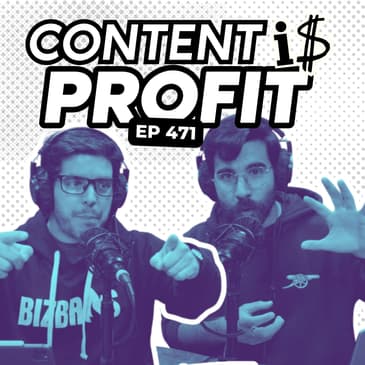
Today we go over a tactic that has been hiding in front of us, that you can use too. It's something as simple yet powerful as your podcast's thumbnail.
Today we are peeling back the curtain on the art of crafting thumbnails that not just catch the eye but practically command your audience to listen.
We're not talking hypotheticals here. The strategy behind the massive success of "Diary of a CEO" – a $1.2 million show – it's all about the relentless pursuit of the perfect visual hook.
Test, refine, and test again. It's not just a mantra for YouTubers; it's a playbook for podcasters too.
And if you're thinking, "But I don't have the big bucks for testing," hold that thought!
Some creativity, amazing free tools, and simple testing frameworks can unlock this one for you.
You can see our faces light up as we go through this, because of how simple it can be.
We also explore how Doulingo crushed every metric of growth with a very unconventional method, which, by the way, everyone has access too.
So there you go... two incredibly effective strategies for you to crush content in 2024!
Enjoy!
Timestamped Overview:
06:40 Setting up strategy for engaging content creation.
08:34 Maximize thumbnail impact to increase YouTube views.
12:40 Analyzing successful tactics for content creation strategies.
14:09 Content longevity on audio and YouTube platforms.
19:43 Brands shift to engage with younger audience.
20:15 Encouraging app engagement through polarization and humor.
24:08 Utilize team personalities for consistent brand content.
26:55 Create new content with comedy to engage audience.
29:49 "I forgot, so I was confused.”
Connect with FONZI:
Connect with LUISDA:
Subscribe to the podcast on Youtube, Apple, Spotify, Google, Stitcher, or anywhere you listen to your podcasts.
You can find this episode plus all previous episodes here.
If this episode was helpful, please don’t forget to leave us a review by clicking here, and share it with a friend.
You can go here to see the full list of episodes
[00:00:00] The strategy behind the $1.2 million podcast, Diary of a CEO and I will say that's from 2021.
[00:00:08] I'm sure now he's probably doubling that easy.
[00:00:12] Easy. A lot of people pay a lot of attention to the thumbnails even some creators say they
[00:00:17] first imagine the full thumbnail and title before they even create the video right?
[00:00:21] Is this going to be attractive enough for us to create if not worth it?
[00:00:25] Test, test, test and then invest.
[00:00:28] And we're also going to be talking about dual-lingos marketing playbook to two-ex, their
[00:00:34] active user base. Things like hey if you don't log into your Apple, kidnap your family
[00:00:39] type of deal right?
[00:00:40] Literally.
[00:00:42] Yeah, so look at how you have been personifying your brand is it you, you have somebody
[00:00:46] in your team are you gonna create some sort of fictitious personality again are you gonna
[00:00:51] grow to $1.2 million using this strategy?
[00:00:55] Who knows?
[00:00:56] No disclaimer, we don't promise anything.
[00:00:58] But hey, I'm Luis.
[00:01:00] And now I'm Luis.
[00:01:02] And you're listening to the content is Profit Podcasts.
[00:01:07] Jojo Jojo, what's up everybody?
[00:01:12] Welcome back to content is Profit.
[00:01:15] We are back here in the studio for a solo episode.
[00:01:17] Fancy Colton this morning he's like no guest today, no problem bro, I got you.
[00:01:22] That's right.
[00:01:23] I'm looking yourself.
[00:01:25] What are you guys talking about?
[00:01:26] We're talking about the strategy or part of behind the $1.2 million podcast, dire of
[00:01:34] a CEO and I will say that's from 2021 on an episode that he talked about that he said he
[00:01:40] was making 1.2 million.
[00:01:41] That's right.
[00:01:42] I'm sure now he's probably doubling that easy.
[00:01:46] Easy.
[00:01:47] Not only that but you know he has companies that he's an investor of that he promotes.
[00:01:53] The relationships that he has built.
[00:01:55] Yeah.
[00:01:56] I'm sure this podcast is probably anywhere between 4 to 5 million at the moment and we're
[00:02:01] also going to be talking about Duolingo's marketing playbook to 2x their active user base
[00:02:08] to over 80 million.
[00:02:11] I'll tell you something, they have not gotten Katie yet.
[00:02:14] She has not been learning Spanish on Duolingo.
[00:02:17] I feel like Katie would see their strategy and run the opposite way.
[00:02:22] There's a lot that we can learn from again, from both from this strategy.
[00:02:27] Again, are you going to grow to 1.2 million dollars using this strategy?
[00:02:32] Who knows?
[00:02:33] You know, this claimer we don't promise anything but there's a very good takeaway for
[00:02:38] you here that you can actually start implementing right now regardless of the size of your business
[00:02:43] and same with Duolingo.
[00:02:45] Right?
[00:02:46] Sure they have all the resources in the world but the main the key takeaway from this
[00:02:50] conversation you can start pretty much implementing from today.
[00:02:55] Right away, that's right.
[00:02:56] I'm excited, man, let's dive in.
[00:02:57] So the first example, you show it to me and this is maybe a strategy that we've kind
[00:03:02] of commented here and there.
[00:03:03] We've seen it.
[00:03:04] You know people testing, can we dive into it a little bit?
[00:03:07] Yeah, of course.
[00:03:08] Testing thumbnails on YouTube specifically.
[00:03:10] You hear creators like Mr. Beast.
[00:03:12] Like hey, we create XMN thumbnails and we test them out.
[00:03:16] We put it out to the world and see what people are reacting to and then we're learning
[00:03:20] from them and then you actually choose the ones.
[00:03:22] There are tools out there like two buddy for example, VIQ they led you A B test thumbnails
[00:03:29] and why the thumbnails right specifically on YouTube is because that's one of the entry
[00:03:32] points for your audience into your content right?
[00:03:35] They'll see the thumbnail will be attracted to it.
[00:03:38] They click on it and then they presented to your content right?
[00:03:40] Yeah.
[00:03:41] So a couple of the metrics that YouTube is looking for is click through rate right?
[00:03:44] That's the percentage of people that click on that thumbnail and watch your content right?
[00:03:48] Yeah.
[00:03:49] They go into your content and show if they watch it.
[00:03:51] And then the second one is retention right?
[00:03:53] Is your content good enough to retain them for X amount of time?
[00:03:56] Yeah, they watch time.
[00:03:57] So that's why the thumbnail a lot of people pay a lot of attention on the thumbnails even
[00:04:01] some creators say that they don't they first imagine the full thumbnail and title before
[00:04:07] they even create the video right?
[00:04:09] Is this going to be attractive enough for us to create if not worth it?
[00:04:13] Yeah.
[00:04:14] I said that I want you to put in between your ears in your brain and cement this.
[00:04:19] I think this is very important.
[00:04:21] We share this now with our clients every time I'm on a call with them.
[00:04:25] I tell them asymmetric effort right?
[00:04:28] And asymmetric effort what means is a more span majority of your effort where most people
[00:04:33] spend majority of their time, which is on their thumbnails and on your hooks right?
[00:04:39] If you don't get people's attention in the first three, five seconds of the video, people
[00:04:44] are going to fall off and all that effort that you put in the rest of the video is going
[00:04:48] to worth zero nothing.
[00:04:50] So asymmetrical effort means put more effort where you're going to have majority of people
[00:04:55] right?
[00:04:56] In copyrighting for example, that would be on the headline great copywriters spend so many
[00:05:02] times they do so many variations of their headlines and sure of course they put effort
[00:05:06] and they're craft into the rest of the copy.
[00:05:09] But majority of their efforts going to be focused on the parts of the people are going
[00:05:12] to spend the most time in same with your content asymmetrical effort spend the most amount
[00:05:18] of effort and time investing into the thumbnail into the hook things where majority of
[00:05:26] people are going to spend their time consuming.
[00:05:28] And then you can go ahead and create the rest.
[00:05:32] So here's the deal like Luis, how does this apply to me?
[00:05:34] Obviously, maybe you have a podcast.
[00:05:38] Maybe you already have before that before you dive into that we didn't fully explain
[00:05:43] his strategy.
[00:05:44] I know which I'm setting up so we can go explain the strategy right?
[00:05:49] Obviously the example that we just talked about was people pre-think their thumbnail before
[00:05:53] we go to you go do create the content and this is mainly like creators are doing entertainment
[00:05:59] type of content for example.
[00:06:01] So let's say you have a podcast, you run a B2B, you collaborate with people on that way.
[00:06:06] Well it's very hard to figure out like why are we actually going to talk about and we've
[00:06:10] talked many times that if you script the thing and we're going to talk about this topic
[00:06:13] right?
[00:06:14] It might not be the most fluent or exciting conversation for the host, for the guest
[00:06:18] and hence for the audience.
[00:06:20] So how do we flip the script right?
[00:06:22] To where with a long form piece of content we can still take the data and the juice
[00:06:29] of what people are attracted to.
[00:06:31] This is why tactically what fans are about to explain it's really exciting and it's something
[00:06:37] that you can try at home and we're going to dive into how can you do it?
[00:06:42] Quick heads up, parenthesis.
[00:06:44] I'm not counting your ass today so you're lucky.
[00:06:46] Yes.
[00:06:47] Let's go.
[00:06:48] So let's dive into the strategy again.
[00:06:50] We talked about A, B testing a lot of people use tools like TubeBody, V.I.Q.
[00:06:54] Now Steve Barlett, which is the host of Dairy of A CEO.
[00:06:58] If you haven't heard that podcast go ahead and listen to it.
[00:07:00] It's absolutely amazing.
[00:07:02] He talks with a lot of great experts.
[00:07:04] He has a little bit of a different approach to the A, B testing.
[00:07:08] Now caveat he has lots of resources, has a huge team.
[00:07:13] I think he has one or two people just dedicated to his trailers only on the podcast and he
[00:07:19] has people that are strictly dedicated just to creating thumbnails.
[00:07:24] Now quick plug here, remember the six levers on your creation side of things and then
[00:07:32] the publishing pyramid.
[00:07:33] What are your resources on creation, production and distribution?
[00:07:35] This is where we talk about this.
[00:07:37] That's how it fits in the model.
[00:07:38] Point is the strategy works.
[00:07:40] Now you get a scale down to your own resources and capacity that you have.
[00:07:46] So what he's doing here is he's not limiting himself just to TubeBody and V.I.Q because
[00:07:51] those platforms are A, B testing once the video is already published.
[00:07:57] So he wants to have a winning thumbnail before he actually pressed publish on YouTube so
[00:08:03] he can maximize the amount of people that are going to click, maximize his click through
[00:08:08] rate.
[00:08:09] Therefore you to rewarsen with more views show him his video to more people.
[00:08:14] So what he's doing is he's actually have like a hundred different variations of a thumbnail
[00:08:22] that of the podcast that he's going to be releasing that week.
[00:08:24] By the way, he's not exaggerating.
[00:08:26] There's actually a hundred variations of this stuff.
[00:08:28] If you go to Facebook at the library and you look for Stephen Barlett, you're going
[00:08:32] to see all the ads that he's currently running for his next podcast.
[00:08:36] At the time of this recording, he's promoting it.
[00:08:39] The podcast with Andrew Bustamante and his literally hundreds of variations.
[00:08:44] And what he does is he is just promoting the thumbnail.
[00:08:49] It's an image of hundreds of different thumbnails, right?
[00:08:54] Actually they're very similar looking.
[00:08:56] The style is absolutely the same but the thing that says on the thumbnails that catches
[00:09:00] people's attention is different.
[00:09:01] I'm going to read maybe two or three example one says how to be a good liar.
[00:09:07] That is one of the variations and the next one says get people to do exactly what you
[00:09:11] want them to do.
[00:09:12] So he has hundreds like this.
[00:09:16] He puts a small budget into each one of them, smaller campaigns and then he runs them promoting
[00:09:21] first the podcast if people click on the link they're going to be taken to the YouTube page
[00:09:25] and they can subscribe so it's already a win.
[00:09:28] You're already building awareness for your podcast but this is where the juicy thing comes
[00:09:34] in which is he's going to realize which one of those ads has a better click through
[00:09:39] rate.
[00:09:41] That winning ad he then turns it into the thumbnail.
[00:09:46] So when people when he launches and he publishes the podcast on YouTube, he's going to launch
[00:09:51] it with a winning podcast proven to catch people's attention and to get people to take action
[00:09:57] and click on it.
[00:09:58] So good.
[00:09:59] So good.
[00:10:00] Now again, you might be saying but this guy has millions of dollars.
[00:10:05] He has lots of resources.
[00:10:06] He has the team.
[00:10:07] How am I going to do the same thing?
[00:10:08] You can scale it down.
[00:10:09] You can need 100 different thumbnails.
[00:10:12] Sure, that'll be absolutely amazing.
[00:10:14] By the way, we're going to put a screenshot here on the screen of maybe an example of those
[00:10:18] ads here where it's like production wise is very simple.
[00:10:23] It's very simple.
[00:10:24] It's solid background.
[00:10:25] You have the face of the guests and then you have your title.
[00:10:28] And there's methods where you can use tools like Canva for example where you can do
[00:10:33] a template type of deal and then all you got to do is change the title.
[00:10:37] I'm sure that's what they do.
[00:10:38] They have a main piece and then they obviously your team or whoever is going to do that is
[00:10:44] going to find an efficient way.
[00:10:45] Hopefully they found an efficient way to do this.
[00:10:47] Now if it is you doing it, you don't need to do 100.
[00:10:50] You can start by testing too.
[00:10:51] You can start by testing maybe five and you don't need to be spending hundreds of dollars
[00:10:56] on this.
[00:10:57] You can put $10 behind each one of them if you're doing five.
[00:11:01] That is 50 bucks.
[00:11:02] Can you spend 50 bucks into creating awareness for your podcast?
[00:11:07] I've been new subscribers to your podcast and at the same time figuring out which one
[00:11:12] is there I thumbnail for you again, asymmetric efforts spend effort and resources upfront
[00:11:18] on the part that most people are going to consume so you can maximize your results.
[00:11:24] I freaking love this and as we're going through this obviously you know, full transparency
[00:11:29] I don't think today we have the resources to run a hundred of these ads but I think
[00:11:32] we can start testing for at least like one episode a week where we can start doing something
[00:11:38] like this.
[00:11:39] I think that would be a cool experiment to run on our side internally.
[00:11:42] Obviously, you know, we follow this guy for quite a while.
[00:11:44] You have followed this guy for quite a while and there's some things that he doesn't
[00:11:48] show that we've done on our show and our clients so that works.
[00:11:52] So we're like perfect model what works right?
[00:11:54] So on your side as a creator or as a creative director of your company if you're in that
[00:12:01] role what are other companies or other creators doing that are working right?
[00:12:06] Look at the successful publishing side of things.
[00:12:08] So obviously I'm very excited for this specific tactic because it's very doable, right?
[00:12:14] A lot on YouTube the YouTubers talk about testing it inside of YouTube because that's their
[00:12:18] platform but as a podcast you're multi-platform right here on the audio side and then obviously
[00:12:23] that's a title that also can be the title of the podcast itself because it's maybe it's
[00:12:29] not just a picture is also what we say inside of that.
[00:12:33] And but anyways, I just want to I think this is super cool where we can start testing
[00:12:38] it out internally for us and I'm excited to see what comes out of it.
[00:12:44] Any other.
[00:12:45] I'm excited too.
[00:12:46] I'm excited too.
[00:12:47] Yeah, I'm excited too.
[00:12:49] It's definitely a great strategy.
[00:12:51] I don't think I've ever seen it before.
[00:12:54] Now the key takeaway this is actually that we've been saying for a while is test, test,
[00:12:57] test, then invest.
[00:13:00] Right?
[00:13:01] That was actually part of our first published empire made guide that we created that had
[00:13:07] a little workshop site on the back and one of the key takeaways was that was test test
[00:13:11] test and then invest.
[00:13:13] Here's a cool test.
[00:13:15] We talked about the long tail of your content, right?
[00:13:17] Like the content that you have published and people continue to download, right?
[00:13:20] On the audio platforms, that's very common.
[00:13:23] We have episodes out for the first seven, thirty days.
[00:13:25] You might not be top performers, but because of the title people are searching for that
[00:13:29] specific content, that specific person that comes into it.
[00:13:32] They continue to gain downloads on the back end, same with YouTube, right?
[00:13:36] We have a couple episodes that they continue to perform really strongly.
[00:13:42] So I'm curious running this not only for your new episodes, but also for your older episodes
[00:13:49] that might not be performing as good, running that and then updating the thumbnails and updating
[00:13:54] the titles inside of YouTube, maybe can give them a second life and people can start downloading
[00:13:59] those.
[00:14:00] That's a good reminder.
[00:14:01] There's actually a creator.
[00:14:02] I forgot his name right now, but he runs a channel called Film Booth and he is one, I
[00:14:08] would say, of the leading education creators out there on YouTube.
[00:14:13] And he scores.
[00:14:14] He actually sells a course that the whole premise is creating incredible thumbnails to revive
[00:14:22] some of your content.
[00:14:23] While a lot of his testimonials are people coming back and saying, I had this great video
[00:14:30] I spent so much time creating, but if flopped, I changed the thumbnail.
[00:14:34] All of a sudden is gaining so much traction.
[00:14:37] That is correct.
[00:14:38] Maybe we can do the same exact thing with the podcast.
[00:14:41] We have some incredible guests that have been in contentist's profit, right?
[00:14:44] And it's such a service that we cannot present that or do our best for people to listen.
[00:14:50] The advice of these people are giving on the show.
[00:14:52] So that's all to do personal for us.
[00:14:56] We're going to grab maybe the five episodes that we want to do this with, create a few
[00:15:02] thumbnails for them and then run this strategy.
[00:15:04] I love it.
[00:15:05] Let's move on to the next topic.
[00:15:06] Do you remember what it was?
[00:15:07] Oh yeah, baby.
[00:15:09] The dual-lingo app that teaches you different languages, specifically Spanish, talking to
[00:15:14] you, Katie, my wife.
[00:15:17] We came across a bunch of content not so long ago about what they're doing strategically
[00:15:24] to increase the subscribers, right?
[00:15:26] And it's a massive number of users.
[00:15:29] It's insane.
[00:15:30] The app is insane.
[00:15:31] There are social media.
[00:15:32] It's insane in the actual sense of the word as we were the heck.
[00:15:36] They're running wild.
[00:15:37] Yeah, they're running wild.
[00:15:38] But you know, we're going to share how they grew two times their active user base.
[00:15:43] They grew it from 40 million active users to 80 million active users in something like
[00:15:50] two years, which is out of this world.
[00:15:53] But I want to share a little bit of the story because I think it's also an interesting story.
[00:15:57] The founder is actually a Guatemalan entrepreneur and he sold, he actually created a recapture.
[00:16:02] Those little things where you put the letters on Google that are very annoying when you're
[00:16:05] trying to sign up, right?
[00:16:06] That they think you're a robot?
[00:16:08] Well, he created that and he sold it for like 10 million.
[00:16:10] Well, the article quotes somewhere between 10 million on 100 million.
[00:16:15] That's a big gap.
[00:16:16] That's a very big gap.
[00:16:17] But later on he came up with the genius idea of starting to a lingo and he got founders
[00:16:21] like he had investors like Tim Ferris and Ashland Kutcher some big investors in there.
[00:16:27] Now fast forward to 2014 they're raising 20 million dollars and they have 25 million
[00:16:35] registers users pretty, pretty good.
[00:16:39] But it's in their growth has been insane since then they now have 500 million users actually
[00:16:46] that was by the end of 2020.
[00:16:47] So now they might have more 500 million users and now they have 83 million active users.
[00:16:56] That is absolutely bonkers people that are literally logging into the app.
[00:17:01] I think it was at least those 83 million people were once a month but they have 24 million
[00:17:08] people that they sign up into the app that they log in every single day.
[00:17:13] And this is not to play games, this is actually to learn a language.
[00:17:16] That's to learn a language and well obviously they've done multiple things for their success.
[00:17:21] Part of it is game if I am the app if you never use dual lingo.
[00:17:24] It's a fun app to use personally.
[00:17:26] I don't know how much it actually teaches you a language.
[00:17:30] But if people keep coming back, it must learn it.
[00:17:35] I have a preference.
[00:17:36] I use one called Pimsel is I think it's better dual lingo.
[00:17:40] I'm sorry about that but lately they've been doing marketing what is called unhinged
[00:17:46] marketing on TikTok specifically which is straight up weird.
[00:17:51] It's meme heavy.
[00:17:53] They do a lot of memes but it's just I get straight up weird you see these things and you start
[00:17:59] laughing, you're like what the heck?
[00:18:01] The one that I saw the other day was their mascot dual right and it was portraying a
[00:18:08] bouncer on a club and the people to get into the club they had to show them their streak
[00:18:14] meaning how many times they've been doing dual lingo in a row.
[00:18:19] They used it and one of them didn't have it and he's like no you're out kicked out
[00:18:24] and then this is like the dual it's just raving out there.
[00:18:27] I get something super random, super weird but I saw it.
[00:18:30] I laughed.
[00:18:31] I showed it with you and I was like this is awesome.
[00:18:34] Then I started going through their whole Instagram is just again.
[00:18:38] I don't have any other words straight up weird.
[00:18:40] Things like hey if you don't log into your abble kidnap your family type of deal right?
[00:18:44] Yeah, literally yeah right the comments you hear the comments on people are like please
[00:18:49] please don't please don't hurt my family.
[00:18:52] I promise I'm gonna log back in right and they have so much engagement it's absolutely
[00:18:56] amazing to see and honestly is you know you would imagine brands like that would be all
[00:19:06] about being professional right about all right we're gonna keep it all super brand
[00:19:11] they did a big shift because they weren't like this.
[00:19:13] Well we're they shifted and now I think this is actually a better brand and they're catering
[00:19:17] to younger people as well.
[00:19:18] And again elements right like lean towards the polarization side of things right?
[00:19:23] Like they obviously their main objective is getting people to use and be active on the app
[00:19:27] because they're gonna provide the result of their product which is learning a new language right
[00:19:31] so for that to happen people need to use the app so how do we get people to use the app
[00:19:36] before that how do we get people aware of the app that the app is actually on their phone because
[00:19:41] you know it's happened to me right for example you know I want to refresh on my Italian
[00:19:45] so I downloaded the app I did a couple sessions but then you know life happens and then you forget
[00:19:49] to use it.
[00:19:49] How do we re-engage those customers that are already there those users that are already there
[00:19:54] and gain new ones?
[00:19:55] Well it's all about the attention so how do we get the attention so for them this strategy was going
[00:20:00] hey let's go full polarization full on hinge right you know culture references meme references
[00:20:07] you know crazy jokes and things where it will start the conversation right you have people
[00:20:13] that are gonna love it like us for example right we're like oh this is actually great we go towards
[00:20:17] the side of the comedy right maybe darker comedy maybe a little bit right yeah I mean they
[00:20:22] have I'm gonna be honest I saw some of their posts that I was like add this is just straight
[00:20:26] of weird yeah add doesn't really call to me but some of them right it's memorable yeah some of
[00:20:30] them are pretty funny but you remember right I downloaded the days like okay how consistent can
[00:20:35] we be with this like how frequent can we be with with this because you're gonna get winners you're
[00:20:39] gonna be piece of content or engagement side of things there are not gonna be winners and that's
[00:20:43] okay right and then you're gonna have the people that really love it or remember it and then
[00:20:47] you're gonna have the people that might not love it and might not remember but guess what they're
[00:20:51] not your ideal clients right because then these people might reignite the relationship with you
[00:20:55] under company so you know as we're walking and talking about these episodes I told you I'm like
[00:21:00] I would love to see the pitch of the person that had that idea to the CEO right yeah and we made
[00:21:07] a mission we made a mission to actually find out who is their main creative out there I do a
[00:21:14] little we're gonna bring them to the podcast hey this is like taken we're gonna we're gonna find
[00:21:20] you and we won't kill you but we'll bring you to the podcast so there's a principle in this yeah
[00:21:27] right again sure they have probably a huge creative team that is making all this stuff possible
[00:21:34] how can we bring it down to us to our brands and the principle for me is personification of a brand
[00:21:40] and I wrote something about this recently but pretty much you want to personify your brand
[00:21:47] so people can relate to you right you're gonna have a set of values your company's gonna have
[00:21:51] a set of values those are portrayed through your persona that you're putting out you know through
[00:21:57] your brand and people are gonna relate to that and they might become customers of yours there's
[00:22:03] plenty of examples of this right there's companies that their founders are the main persona for
[00:22:09] example Gary Vaynerchuk or or Moisey you got click fondles with Russell Bronson reddors
[00:22:15] a lot of those I feel like those are the the most cost effective ones the main ones to start right
[00:22:20] their founders they know their values they know exactly what they want who better yeah to speak
[00:22:25] of the company than they are now you have brands like dual-ingle which have a fictitious character
[00:22:31] like duo or geico with the little lizard but then again did they get go yeah lizard get go whatever
[00:22:39] but then you also have influencers huge huge brands you know that maybe they stood test of time
[00:22:47] they've been out there for a while and for them you know their CEO might be somebody doesn't really
[00:22:52] want to be on screen but guess what they got plenty of resources to go and hire somebody with
[00:22:57] similar values that can be a good face for the brand and you know they sponsor them good example
[00:23:04] that comes to mind is ninja with you know rebel rebel wanted to go into the gaming industry
[00:23:12] and they went on and sponsor ninja and again it's happened with in all their industry with multiple
[00:23:19] multiple people now another one that I think we actually discussed this one in an episode of
[00:23:25] Condon's profit with Ben Brebbery episode 340 which is internal personalities maybe you as a
[00:23:31] founder you don't want to be the personality but you have somebody in your team in the leadership
[00:23:36] team that they have a great personality they do represent the values of your company right and
[00:23:41] they know the message and they know how to communicate that to the audience so they could become
[00:23:47] that personality of your brand again there's multiple ways on doing this and you can always
[00:23:53] bring him back down to you but at the end of the day your brand needs content right you need to be
[00:23:59] creating content consistently and you need to be thinking about okay what is this personality that
[00:24:04] we put in front of the audience right what are the values what is her core message right and
[00:24:10] again don't try to appeal to everybody because if you try to appeal to everybody you appeal to
[00:24:13] no one that's why Duolingo they're on hinge and they're unfiltered and they're polarized in as heck
[00:24:20] because that attracts more attention and sure in that process you're gonna segregate some people
[00:24:27] that might be interested in trying to your audience but you want people that are gonna be
[00:24:30] faithful to your brand people you want 24 million people that are gonna log in daily do you want
[00:24:36] some carons in your audience you want some carons in your customer base I don't think so no one
[00:24:42] care in my customer base there you go so you can just you know be polite seeing your message again
[00:24:47] as long as it is aligned with your values and your core message that you want to express to your
[00:24:52] audience my personal opinion here is obviously you know you have these big companies some of them are
[00:24:57] taking these risks right and they're and they're leaning on to strategies like this one or tactics
[00:25:01] like this one and he's paying off and it's gonna be really good and and it's a great example for
[00:25:06] others but I also think that smaller companies and smaller creators have an edge to be able to do
[00:25:12] this and adapt faster than bigger companies right you you might have a smaller team maybe you are
[00:25:17] the decision maker right and then you can make that decision today and be like perfect from next week
[00:25:23] this is how we're gonna communicate based on our values and what we want and the product that we
[00:25:27] have and how we do it right so you know earlier today we're talking about can we do on our specific
[00:25:33] example right I run a specific value proposition of one of the episodes through a chat GPT and be
[00:25:39] like hey chat GPT let's see how funny you can be right right a skit about a minute right not too funny
[00:25:45] not too funny I laughed at the end I thought it was hilarious but the builder was a little slow but
[00:25:50] anyway and I read it to fancy we need to fit we need to fit them the episode that we did with
[00:25:55] Mike free so it learns that people need to laugh every 30 seconds yeah but but here's the point
[00:26:00] it's like okay can we try a new piece of content that resonates with us right obviously we like
[00:26:04] comedy we like to be funny we like to laugh right how can we relate it to the the wins that we can
[00:26:09] provide to our audience for example and then how can we create something that's really unique
[00:26:13] and see what happens obviously there's gonna be people like oh this was cringes was horrible
[00:26:17] like I don't like this guys don't do it anymore there's gonna be people are gonna laugh or
[00:26:22] the people are gonna be you know loving that jokes like me and they're gonna be like this is
[00:26:25] actually great but at some point there's gonna be you know there's gonna be that engagement
[00:26:29] there's gonna be something like that so maybe that's something that we do again we have to align
[00:26:33] it with you know our levers and our publishing premium and resources and things that that we do
[00:26:37] internally but mate start thinking about those ideas on how can you lean into strategies and tactics
[00:26:43] like the ones that we talked about today for your advantage because you're already in
[00:26:47] opposition to gain a lot of ground very fast and capitalize on it very quickly yeah so let's recap
[00:26:55] on today's episode first what strategy you can do to build your podcasting brand and it is a test
[00:27:04] test then invest right we talk about a b testing specifically on facebook before you drop your
[00:27:10] episode so you have a winning thumbnail so you can maximize that click through rate and the
[00:27:17] attention that you're getting as soon as you launch your podcast and then the second one we talked
[00:27:23] about the duallying go marketing playbook to two x or active user base and the principal there was
[00:27:30] to personify your brand so look at how you have been personifying your brand is it you do have
[00:27:36] somebody in your team are you gonna create some sort of fictitious personality right but at the
[00:27:41] bottom line at the core of this you need to understand what are your values what is your core message
[00:27:47] that you're trying to communicate with people and don't be afraid to be polarizing so good this
[00:27:54] was pretty good absolutely love today's episode lots of fun I like when we do this once I really do
[00:27:59] and if you are looking to fully blow the creative potential of your brand make sure you hit a
[00:28:08] sub on the dm at bs brosco we can help you set up the systems right to create consistently
[00:28:15] and we can provide you with also resources to make your brand look super nice and tasty nice and
[00:28:22] tasty nice and tasty maybe nice and tasty with that say guys thank you so much for
[00:28:30] tuning to the content's graphic podcast go ahead and follow the show in your favorite podcast
[00:28:34] and platform and on social media at bs brosco that is rana if today's episode help you move one
[00:28:39] step closer towards your goal please don't forget to share it and comment whatever I forgot what
[00:28:46] it comes here but you know just just do something positive and we'll see you in the next one bye
[00:28:51] stay care