
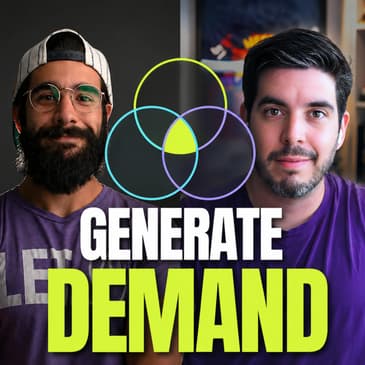
Fonzi sent me a text on his drive home. One line. "The reason we create content is to create trust. Trust generates demand." And that text turned into this whole episode. Because here's what most people get wrong... they think their content isn't working because the hook was weak. Or the framework was off. Or the template didn't convert. It's not that. There are three things underneath every piece of content that actually decides whether someone believes you. Miss one and it doesn't matter how good your edit is. Hit all three consistently and people show up to the call already ready to work with you. We break down all three in this one, plus how to run your existing content through it like a filter and see exactly where you're leaking trust. Also in this episode: the oil change story that explains niching better than any course, and the answer to "what if I don't have any proof yet." 👉 Free context document download + Golden Boulder Sessions: www.businesscreator.club
Chapters: 00:00 Hooks and frameworks won't save you 00:35 Praxis — buyer conversations in 120 days 02:11 Welcome back... Friday Hangouts 02:25 The text message that started this episode 03:30 Business Creator Club + Golden Boulder Sessions 05:00 The reason we create content is to create trust 05:11 How do you speed up trust? 06:15 The asterisk — it has to be genuine 08:53 The three circles 10:01 How the circles map to your sales funnel 10:55 Empathy — top of funnel 11:56 Describe the problem, they assume you have the solution 12:49 Knowing your who (and why we learned it late) 13:49 The Take 5 oil change story 15:51 Knowledge — middle of funnel 16:32 Catch Me If You Can — stay one step ahead 18:04 Knowledge is implementation, not information 19:35 Careful — the trap of chasing every opportunity 21:41 Your niche is the who and the what 22:37 The studio conversation that became a partnership 24:13 Competence — bottom of funnel 24:35 No proof yet? You are the proof 25:36 The beta results 26:37 Live demonstration as proof 27:57 What Amazon reviews teach you about buying 28:55 Do the work for free... then document it 30:06 How to use all three as a lens 32:03 Recap and close 32:17 Free context document + Golden Boulder Sessions 33:30 Boston, Unbound, and see you next episode
[00:00:00] Hooks, Frameworks, Templates, None of that thing matters when you're creating content if you don't know how to build trust with the person that you're talking. And that is exactly what we're going to be teaching you in today's episode. Last episode we talked a little bit about the hooks and the frameworks and you know the customer journey and all that stuff on how to create content but none of that is going to work if you don't understand this principle of how to build trust with the person that you're talking about.
[00:00:30] Which is just 3 simple steps and we're going to guide you through all 3 of them. But before we start I just want to invite you to join us in our new program via Conversations in 120 days or less. So if you are an expert that you feel that maybe you're creating content and you feel like that content is not working out, you're maybe getting a little bit burnt out, you're tired of all the noisy advice and you're confused, right?
[00:00:57] You feel undervalued because your content is being ignored and you also feel frustrated because you're not having conversations with the right prospects. This program is for you. We already did our beta test. We walked one education company, education, coaching and consulting company and they ended up with over 500 leads and over 84 courses sold.
[00:01:21] And most importantly, they left with the skill to do it repetitively over and over again. So we're opening a small group just like a case study group of 5 people. 2 of those spots are VIP. And if this sounds of interest to you and you want to go from proven but invisible to proven but very visible and having the right conversations with the people that you can help, just send me a message on Instagram at Fonzie Creates.
[00:01:51] Just text me Praxis, P-R-A-X-I-S, Praxis and I'll know you want to talk about this. We'll have a little conversation and if it's the right fit, I'll send you an invite to join us on this case study group for buyer conversations in 120 days or less. Now, let's begin. Hey guys and welcome back to Content Is Profit. Looks like we have Friday hangouts, baby. Let's go.
[00:02:14] As we record this for you is Wednesday. You know, makes total sense. But today I was coming from lunch and I got a text from Fonzie and the first line says, The reason we create content is... Ooh, and then it gets better and there's like maybe like four things that we can talk about. So what's up, Fonzie? How's life treating you? What's up, what's up? We're back after another week. Two consecutive weeks. Two consecutive weeks. Let's go.
[00:02:43] We're on a streak. We're on a streak. But yes, I had a little download on my way home and literally my thought was like, Why do I always get these ones when I cannot write them down or something? So I found a way. I found a way, wrote it down, sent it to you just so I can keep it in there for a moment. I'm going to polish it a little bit more later on because it's already a thought that we've talked about in the podcast previously. Obviously, it's something that we actually talked about quite a bit.
[00:03:13] But I think this aligns better with some other concepts that a lot of people might be familiar as well. And it's like just a good principle to filter your content through to just make it more effective. Yeah. Now, I want to do a huge shout out for the Business Creator Club people. We've had a couple of people that have been receiving my emails. By the way, I want to say there's an email that goes out that is me personally asking you how you doing.
[00:03:41] So it's not a it's not a bot. It's not somebody else. It's me literally seeing your new name in there and asking you, you know, what motivated you to connect? That we love to connect with people and we're learning. But so huge shout out for those because the people are coming into Business Critical. I'm going to be part of what we're or I guess what I called Golden Boulder Sessions. So the next one is going to be recorded this Tuesday. And it's about the two things that you can do to close 90 percent of your sales.
[00:04:09] So we're bringing a former content is profit or content profit guest, content is profit, hall of famer, Sean Malone. And for the true OGs of the show, him and Chris have been, you know, out there for a while. And we've been using their technology tool called Flow Chat, which is amazing. So they're going to be coming in and it's going to teach everybody this because who doesn't need more sales? So anyways, that was my shameless plug here before we get started with it, with the show.
[00:04:39] So come join Business Creator Club, Business Creator.club. Let's go. They are literally the king of sales. I'll say that. Absolutely. Kings. If there's somebody you want to learn from sales is those guys. One hundred percent. All right. So let's get started. You ready? I'm ready. Trust. Trust generates demand.
[00:05:07] So the question is, OK, so how do we speed up our way to trust? Right. And we've talked about that before. We've talked about how the whole idea, like some people can create trust in like a single post. Some people might watch a long YouTube video and they create that trust. And then people are like, right, I'm ready to buy their product. And for some people, of course, it takes a lot. Obviously, the shorter, the smaller the product, right?
[00:05:34] And price wise, probably a little bit more impulsive, less. You need a little bit less trust to make the purchase. Usually what you hear out there is that for higher tickets, right? You need, you know, they're long sales cycles. You need to build a lot of trust. And then people are going to be like, all right, let me consume some of your long form piece of content. And I see a lot of your short form. Maybe get retargeted with your ads, you know, get improved, blah, blah, blah. And then after a while, you're like, I'm ready. I'm ready to make an investment.
[00:06:04] That being said, I do think there are ways to speed up that trust. And we're going to dive into those here today. I want to put a little asterisk here. And I want to mention genuine trust, right? Like, because I think as we go through these four elements today, you, some people might be like, how do I actually engineer this in our company or in our business?
[00:06:33] And that's perfectly fine. But we've seen in many businesses that they try to manufacture trust without, you know, believing in their product or without believing that they need to help the customer before, you know, everything else. And if you're in a position like that where you might see some of your team members do this, just heads up, right? I was, and this was prompted, a conversation that I had with a friend this morning, which he just landed like a full-time sales gig. And he's been like training for the first like five weeks.
[00:07:03] And he told me that it was really hard. And this is a guy that has been in customer service for a long time. And now the transition to sales because of the way that he saw it was like, well, I just need to be, you know, I don't want to be, you know, salesy or sleazy or like, you know, making people do these decisions. But the product that they sell truly changes people's lives and are helping them. And the call that I had today was after his training and after he's been out in some conversations and he completely flipped. And he now like he studied the product. He believes in the product.
[00:07:32] He's seen the change. He's so genuine about this. And I want to like put a parallel between sales and content because it's the same thing. It's like content and those points of contact obviously aren't going to increase the trust with the things that we're going to share today. But it has to be genuine. It has to be genuine. Yeah, 100%. I agree with you. I mean, I personally don't like the feeling of like having, and caveat, I'm not the best salesman out there at all, right?
[00:08:00] But I personally don't like to like put people in that awkward situation. That being said, though, I do think sometimes for certain type of products, people do need to make a decision that puts them in an uncomfortable situation, right? At the end of the day when they're like seeking growth or, you know, other type of things, right? Whether that is personal growth or like growth on their business, some of these things are going to be investments that are going to pay out later.
[00:08:28] And I guess your job as, you know, the sales guy or the marketer, the person sharing the message is, okay, how do I balance that risk reward in their mind? And again, how do I build trust with them so they feel comfortable making a decision and moving forward with me? So first thing that I want people to imagine is, right, three circles, kind of like a Venn diagram, and they all connect in the middle.
[00:08:58] That middle point right there is trust. So what are the other three circles around? Well, the first one is empathy. The next one is knowledge. And the last one is competence. And we're going to go one by one. And again, I think once you see this concept, it's not like you're going to not need frameworks or hooks and all these things.
[00:09:23] It's like all those things are, I think they're valuable and they have their place, but they're not your priority to learn. This is a principle that you can use as a lens to pretty much critique your own content, to make your own feedback loop, right, of do something and then ask yourself, what happened here? What am I going to do about it, right? And then just keep improving over and over again. And this is a great lens to judge your content through.
[00:09:53] So, again, trust right in the middle. And then the three circles are empathy, knowledge, and competence. The cool thing about this, too, is that it aligns with a sales funnel, right? And for those that know the sales funnel, you got your top of funnel, middle of the funnel, bottom of the funnel. Top of funnel usually are for people that are more problem aware, right? They're like, okay, I know I have this problem. I had this little each. Middle of the funnel, people that are already a little more solution aware.
[00:10:21] It's like, okay, I have this problem and I know I need some coaching of X, Y, and Z to solve it. And bottom of the funnel is like, okay, I know the problem. I know the solution. Now it's just about, you know, taking action. Like I just need, I'm more product aware. Like which coaching am I going to go with, right? Like which person am I going to work with on this next project? So when you see it that way, these three circles align perfectly with the funnel as well.
[00:10:50] So top of the funnel, we have empathy. And recently I heard Taki Moore, which is a great, great marketer. You haven't seen his content, totally recommended. But he was saying the greatest weapon you can have as a marketer is empathy. And what is empathy? Well, it's just a deep understanding of your who, of who would you serve? Who are you helping, right? Like you need to literally get in their head and understand the conversation that they're having with themselves, right?
[00:11:20] What are their pains and their problems short term? What are their fears long term? What are their wants and needs right now short term? And what are the dreams that they're aiming towards long term? Like really understanding how they're thinking, their problems, their challenges, you know, their desires. That is going to make them see you as somebody that understands and I can potentially help them, right?
[00:11:48] There's a saying, I don't know who, I'm probably butchering it. And I don't know exactly who said it. So my bad, I'm sorry that I cannot attribute it. But pretty much it went something along the lines of people, if you know how to best describe a problem, people will assume that you have the solution. So if you really truly understand that person that you're trying to help, that is half the battle, right? And like you said, we're talking about problem, right? Problem aware, that top of the funnel.
[00:12:18] Main thing you need to know is to have empathy. So I know you got some comments. I see you charging in there. So next, we're going to talk about that. Don't say the next one. No, no, I'm just teasing. I'm just teasing. No, no, we already teased it enough times. All right, go ahead then. Yeah, that's complete point one. Did you forget how to podcast or what? Nah, dude, I'm just kind of like increasing the interest on people. It's like, oh, wow, that was so good. All right, let me, what is the next part? All right, cool.
[00:12:46] No, the real thing is I'm going to forget what I'm going to say. So, you know, I think like empathy and what you mentioned, like understanding the who is a real problem for a lot of people. Business owners or people that might be building something online or they're starting out. And, you know, I know a lot of our community are people that are starting out with their messaging and different things. On the B2B side, that might be a little bit different. But sometimes we get confused. Maybe we want to serve everything. Maybe, you know, we're driven by, you know, trying to get as many sales as possible to do that.
[00:13:16] And I think us have done that in many cycles, not saying that it's a correct way, but, you know, we try to sell wide. And then we kind of narrow it down a little bit of it, right? And then we finally have been able to define some of those categories. But understanding that the who is so important because there's going to be other solutions for other people, right? And it's going to help you find your customer faster.
[00:13:37] I wish we would have learned this faster or listened to somebody, you know, and executed faster on this because it does help massively. And, you know, a good example of this is not just in our podcast world, but, you know, we have for oil changes in the street that, you know, that we drive every day. There's like one that is called Take 5. It's five minutes oil change. And then there's another one that is more of like a family thing, right?
[00:14:06] The Take 5, it's like five times more expensive than the family shop, right? But the family shop, you leave the car there for the full day and then you have to go get it maybe the next day, right? But it's a little bit cheaper. The Take 5, they understand their customer because he's a customer that values time a little bit more than the other shop. So you go in there, you don't even have to like step out the car. That's where I go. What's up, my boys right there.
[00:14:34] You go in, it's literally like five to ten minutes. And, for example, I had to do the oil change the last time we traveled because I had literally no time. So I parked there. I do the whole thing. I have my kids in the back. And that was a value for me at the time. And if we were to do it with a little bit more time and plan ahead, then we leave it in the other side. But each one of them understand their customers because they speak to the pain.
[00:15:00] For the Take 5, it's like somebody that, you know, needs to get out of there quicker, that needs like a very good and fast service. And they also offer like different upsells within the process. It was fascinating to me. I love their sales process. That could be a whole different episode. That could be a whole different episode. But I love their sales process. Yeah, it's amazing. But they understand who they are because the next day I show up to the coffee shop and I'm talking to your father-in-law, Fonzie.
[00:15:26] And I mentioned that I went there and he goes, dude, that's so expensive. And to me, the exchange was not really expensive. It was like, wow, like it really solved my problem because we need to travel today. Right? And anyways, the whole conversation. Well, for him, it's expensive because he does his own oil. He does it. He's old school. Yeah. He's old school. All right. Number two. All right. Number two. So now we understand top of funnel, right? Problem aware.
[00:15:56] We need empathy in there. Deep understanding for the who. So we go one step below, right? Middle of the funnel, which is, okay, I understand the problem. And I know there's this solution. People are more solution over middle of the funnel. Well, in here, what we need to create trust, the second piece, is knowledge, right? Can we be their guide?
[00:16:19] Are we one or two steps ahead on what they need to know so they can take action towards the goal that they're looking for, right? And I always, well, we love this example. We've heard it a long time ago, but it's the whole catch me if you can example of the whole con guy that pretty much fake being a pilot, right? And he was like a pilot for a while. And then, or what?
[00:16:48] Now I'm mistaken, actually. I think that's the guy that like faked the checks. I think you're mixing movies. The checks, yeah. I'm mixing. I think I'm mixing stories. Well, whatever. This was this one guy that had like a pilot license for like a long time. And it was like, he never took the test. It's like, it was all fake. Like, and when they caught up to him, they're like, what? Like, how all this happened? And he's like, well, I'm just one step ahead. I just butchered that stuff. I just butchered that. I think the lesson here is that we need to watch the movies before we go there.
[00:17:17] But no, the catch me if you can. I haven't watched movies in a while. It's with DiCaprio. And like, he stays a step ahead. So the example I remember from that is like, he's a college professor. And he's just like reviewing the night before the lesson that he's going to go teach the next day. And then, you know, he teaches that one lesson. And then whenever there's like questions that he doesn't know, he kind of postpones them. And the next day, he's like, okay, what am I going to teach tomorrow? And he goes out and he stays like just one little step ahead. I knew there was the example somewhere in there.
[00:17:45] That's why we do the podcast, the two of us. Because you can't pick it back up where I fumble it. I appreciate that. So yeah, the second, that second element is knowledge, right? Like, do you have the knowledge now to solve the problems that they have? And knowledge is not, I'm not saying like just information, right? But like, do you actually can help them implement and do the things that they need to do so they can achieve the solution? So how does that look inside of your content?
[00:18:12] Well, you make a more solution aware type of content, right? Yeah. Which is kind of like this one that we're talking right now. It's like, hey, look, the problem is not that you have your hooks and your frameworks wrong or like all these other type of templates that they're giving you online. No, no, no, no, no. The solution for you is understanding this framework of how to build trust fast, right?
[00:18:38] So you see, it's a little more middle of the funnel aware in that sense. So that is a second one, knowledge. Again, this is something that you also got to work on on your whole life, right? You probably hear it. If you're not growing, you're dying. And right now, I don't know about what industry you're in exactly, but on our industry, everything is evolving very, very fast, right? What I like about this is like, this is a principle.
[00:19:06] Like this is not going to change regardless of the tools that come out there, right? Regardless of, you know, platform changes. Like all this, like it's applicable not only online, but like in real person as well. So that's why I'm a big fan of these principles. So again, we got empathy, deep understanding of your who and knowledge. Can you be their guide to achieve the goals that they want? Yeah. Yeah.
[00:19:34] So on the knowledge, especially if you're creating content or if you're documenting the processes, I think there's two sides here. One is you might be already working with a company and you guys know exactly what you do on the one product that you guys sell. This is probably best case scenario. And you guys start creating content around that one solution, right? With the different levels. Where we come from and where a lot of entrepreneurs that might be listening to this show, they might be coming from a place of I'm learning, I'm documenting.
[00:20:01] You know, a lot of the advice that people see online is like, go document the thing that you're doing, right? And as you learn, as you document, you're going to be learning and documenting new things every time, right? But here's my be careful thing. Be careful because the moment you start doing some of that, you're going to start getting interest and opportunities. And here is where you as a business owner needs to stay focused. And this happened to us many times and we've seen it. And to this day, it's the same thing.
[00:20:28] You know, the most recent example is, you know, with me like streaming gaming for my kid, like all of a sudden we have the whole, like we could legit just build a whole product about like how to stream, like from setup all the way there. But do we, can we stay focused on the whole thing? So be careful when you go something like this on your knowledge. And if you're in that position to where like, oh, I'm so excited learning about all these things and document it, make sure you bring it down to the one solution that you might
[00:20:58] be selling as a story point. I think it's incredible because it will present opportunities for you to chase for the business, but then try to make that transition, you know, quicker to be like, okay, cool. Here's the direction that we want to go instead of providing, you know, 50 solutions. Cause that's how we've seen it. It happened to us. We're a little bit more aware now to where like, oh, this is, this will be so cool to go after this. And then opportunity presents. And because maybe we need the money or we need to go get, get the cash.
[00:21:28] Then we sell something like that. And then you get into like this vicious circle of different solutions that you might not be, you know, fully fulfilled to, to, to go do. Right. So now I was going to say, uh, an important part of the, the knowledge piece in here is also learning how to properly communicate it to the person that you want to help. Right. And it goes hand in hand with what Marvillard is saying. Like you need to obviously have clarity on like, what is that, like, who is it that you're
[00:21:58] helping? And like, what are you helping them achieve? Right. Like that is your niche. Your niche is the who and the what, that intersection between the two. Like that is your niche. Um, so when you, when I mean knowledge in here, it's like, of course, don't go through like all these like rabbit holes. And it's not about learning per se. The, the, the, the important part about knowledge in here is do you, do you have the information
[00:22:24] needed to fill the gaps from your prospect so they can achieve the thing that they're set out to do that you tell them that you're going to do for them? Can I do a quick example? For example, like a conversation we just had here in the studio, which like it was, it happened not in content, but it could be a piece of content. And it's basically how to grow a video podcast. Right. And, and the customer came in and we sat down and I might, listen, here are some things that we've tried with other shows. And I screen shared what we did.
[00:22:53] Uh, and I show them how we did it. And, uh, cause you know, the thing is coming back in the studio, I'm interested on the production side of, of the business, right? I told him, listen, like we're, we're not, you know, we're not a marketing agency. We're like a production company. We're a production house. Uh, but the help that he needs is not only on the production side, but also on the distribution. And because of the knowledge on that side, he was very interested to continue the conversation and offer a partnership. And I'm like, well, how does that look like?
[00:23:21] And this is how, you know, we need to be very clear as a business, be like, what is the type of customer that we, that we decide to take on? So, uh, but the example of like me showing that expertise on things that we've done for our internal shows for that person specifically is solve the problem in their head. And they're like, oh, they know what they're talking about. And then they were interested in, you know, continuing their relationship and see where, where it goes. Does that make sense?
[00:23:51] Maybe, maybe I'll leave it to the, to the listener to save that. You weren't listening. You were thinking something else. You were thinking on the next. Nah, I heard you. I heard you. I'm joking. I'm joking. I'm joking. It didn't make sense. It was a great story. It was a great story. I was just muted because, uh, Selena's crying right now. So I was like, just a little, you know, background music. We also talked about this on the phone. Yeah, it's okay. So let's move down to now the bottom of the final piece, which is the third circle, which is competence.
[00:24:19] So, so far we got empathy, knowledge, and now we know that the last piece is competence. And what does that mean? That just means that you can do the job. You can do it. You got proof. Show me the proof. That's right. You got proof. And now you might be listening and you're like, oh man, but I'm just starting. I don't have proof. I don't have results that I've generated for other people. Well, guess what? You are the proof. You can demonstrate.
[00:24:46] You can show people, you know, that what you're saying, you can do, you can actually do it. So that is the third piece, which is- You can go be like, give me a chance and I'll prove it to you. Which is bottom of the funnel, right? People that are already product aware, usually what they need is that little nudge to, you know, to purchase. So the best way to do that is obviously like, that's why you go on, you know, you see an ad of somebody that you know, you like their product, you click it, you go to their webinar
[00:25:13] page and at the bottom they have 3000 testimonials, like the wall of love, right? Like that is why it's in there is because it gives you that sense of like, these people are competent. Like they know what they're doing. They've done it for multiple people. If they've done it for all these people, they can probably do it for me. But now here's the caveat, right? Like I think there's two ways again to do it. I already mentioned the other one a little bit, but if you have testimonials, obviously share them, right?
[00:25:42] If you have your experience, share them. So for example, right now we are launching the four month product, right? Praxis a little bit for a coaching group. Shout out. If you're interested, just send me a DM on Instagram. Praxis if you want to go from proven but invisible to proven but very visible, just let me know. So, but pretty much we've only tested that with one client, right?
[00:26:11] That we did a beta specific for them. And it was great. They had amazing results, right? So if you read the document that I'm sharing with people that are interested in there, there's a single line that says like, hey, we beta tested this. And with our client, you know, they had like around only 2000 followers, which is not that much, but they generated like 500 leads and 84 course signups, which is absolutely amazing. So just a quick little proof of concept.
[00:26:37] Now, if you don't have any of those results to show, I think the best way to do it is a demonstration or a live demonstration. A live demonstration is, you know, set up some time during your day. So I'm going to jump on and live stream myself doing content analysis, right? For example, us. So I would jump online, pulled, you know, walk people through my research process, grab a
[00:27:06] couple of content pieces that I think they're great, break them down, pull the scripts and say, okay, this is why I think this works. Look how this person is creating trust in this piece of content. Look how they're actually delivering value. And I'm demonstrating live my knowledge, right? My competence. The other way you can do it is obviously without doing it live, but you can do this like demonstration pieces and then just record them and publish them in a short form, long form, whatever it is.
[00:27:35] Some people decide to do them as live webinars, right? Some people do as recorded webinars. There's the format is irrelevant. The point is to just demonstrate that you can do the thing, whether that is by third parties, right? The testimonials or whether that is by you doing the thing. Yeah. I want to highlight something like go to proven companies, for example, and go through their process or even go to Amazon, right?
[00:28:05] Like, and what is the best? What is the first thing that normally people go when you buy a product Amazon? Or the thing that I do is like I just find, let's say one product and there's like five options. The next thing I see is like how many reviews they have and how, like, I want to go and watch like first the amount of reviews. And then I go and I read the negative ones. Usually there's like a ton of good ones, but I go and read the negative ones. But in your case, like look at your buying patterns, right? Like it's, it's going to be interesting.
[00:28:33] And, and, uh, and you can go on and hack, hack, you know, quotation, but like you can, you can model those, those things. For example, um, that could be a great starting point for, for a lot of this thing. Uh, not only on like the sales page, but it's like, okay, how can we bring that to content following a lot of the examples that, you know, Fonzie has, has shared. That's why when it comes to like sales, for example, a lot of people do, okay, well, you don't have the experience. Go do the thing for free in exchange of those testimonials, right? Like for, for example.
[00:29:01] So let's say you're in that position, go do the thing for free and then document you doing the thing for free, right? And that's your piece of content right there. Proving that, you know how to do the thing. Or you see pieces of content, like, let's say you have a landscaping business or you have a roofing business, or you have something that's like that manual. That's why you see a lot of the formats, which is point of view is like the worker doing the work. And, uh, those videos for some reason tend to attract a lot of attention. I don't know if you have consumed it, but when I consume it, I just get messy.
[00:29:31] I just want to be desmerized. Just watching the whole thing. Um, but then they're getting business because they're showing people that they know how to do the job. Right? So when it comes to, okay, do I trust company one, then they might just have a sales page and then I just saw an ad versus, uh, when I, you research the company B and you see the ad, you see the website, and then you see some of the content of them doing the thing. You probably going to go with company B, even if they're a little bit more expensive, just
[00:29:58] because they establish, you know, the empathy, empathy, knowledge and the competence. They just have trust, right? They gain your trust showing that you can do it. Right. Um, I know you might be asking yourself, well, okay, that's maybe that's a lot. Maybe you think this is a lot. It's like, how do I implement this in my content? Like I mentioned at the very beginning, this is just a lens for you to now, when you create a piece of content, you can ask yourself, okay, is this piece of content helping, helping
[00:30:27] me build trust with the person that I want to build? Right. Like, am I actually talking to the person's problems? Right. Empathy. Am I actually sharing something valuable? Meaning I can, I'm helping them go from A to B, right? Knowledge. And then do I have some sort of proof in there that can help them say, this is the person, right? Competence. And that's it.
[00:30:52] Like just use this as a lens to evaluate your content every time you create it, or you can go back and start looking at some of your recent posts that you've made, whether that is short form, long form here on a podcast, and you can start evaluating them. Okay. Maybe I just went too deep in problems and empathy and, you know, I just rambled. Okay. Well, maybe I could have done that a little bit on the knowledge and competence side of things, right?
[00:31:16] Like, did I maybe just talked about all the proof and, you know, I just did this whole case study thing. Okay. Well, maybe I just talked a little bit too much about the competence and the knowledge, but I didn't really empathize too much with the person that I'm trying to help. Right. So again, a really good lens to evaluate what you're doing. And if you start hitting these things in your content consistently and you start getting in front of the right people, you're going to get results that you're going to move people
[00:31:45] to a place where they want to talk to you and they will want to know, okay, what is it that you can do to help them? Actually, when they go and talk to you, they probably already know what you can do to help them. But they jump on the call and they're like, all right, let's do it. How does it look like to work together? Yeah. So cool, guys. Fonzie, thank you for that unload. I think we kind of drifted a little bit. That unload? Yeah. Download. You're unloaded. Downloaded?
[00:32:15] Oh, man. It's Friday afternoon. Let's go. I need another cup of coffee. All right, guys. Again, if you are interested in connecting with Fonzie about Praxis and going from invisible to very visible, go ahead to his Instagram at Fonzie Creates. Send them a quick DM. Also, if you're part of the community, businesscreator.club, we're going to have those golden boulder sessions. These are problems that our community is looking into that we're bringing the experts on those topics.
[00:32:45] We talk all content and production and then we put the sweetener with all these awesome sessions. So the next one is on Tuesday with Sean Malone, but the two things that will help you close 90% of your sales. And yeah, go to businesscreator.club if you're interested. Also, there's a gift there for you. You can download your context documents for your AI content production. So it's a process a lot easier. Anyways, read the emails, guys. It's right there. Fonzie, anything else? No.
[00:33:13] If you want to go from expert but invisible, from proven but invisible to proven but very visible, just hit me up. Send me a message on Instagram, Praxis, and I'll have a conversation with you. Yeah. So good. Also, in September, we're going to be in Boston for Unbound. We're going to be speaking out there. So if you are at the event, come say hi. We're going to be running around with a couple cameras and this is going to be a fun surprise session there for you.
[00:33:42] So anyways, we'll see you guys in the next episode. Take care. See you.